
Blog
Best Camera Bags For Photographers

Published Date: June 2021 Last Updated: Aug 2026
A camera is one of the biggest investments a photographer makes. While many people spend time comparing camera bodies and lenses, the bag that carries all that equipment often receives much less attention. A poorly designed bag can make long photography sessions uncomfortable, leave expensive gear vulnerable to damage, and slow you down when every second counts.
A quality camera bag protects your equipment while making it easier to carry cameras, lenses, batteries, memory cards, filters, tripods, and other accessories. Good organization also helps photographers work more efficiently because every item has its own place.
The Growing Need for Quality Camera Bags
The photography industry continues to grow as more people create content for social media, YouTube, businesses, and personal projects. According to the Camera & Imaging Products Association (CIPA), millions of interchangeable-lens cameras and lenses are shipped globally every year, showing that dedicated photography equipment remains in high demand.

More cameras mean more gear that needs protection. If you’re shopping for your first camera bag or planning to replace an older one, this guide explains how to choose a camera bag that fits your equipment, lifestyle, and photography goals.
Camera Bags in Pakistan: A Fast-Growing Accessory Category
The global camera bags market was valued at nearly $1.82 billion in 2025 and is projected to reach $3.04 billion by 2034, with established suppliers including Lowepro, Canon, Nikon, National Geographic, and Benro leading demand, according to Data Intelo.
Pakistan mirrors this shift. Wedding photographers, real estate agents shooting listings, small-business staff photographing products for Instagram, hikers documenting weekend trips to the north, and students learning photography all need a bag that protects their gear without slowing them down. Local demand has also broadened beyond dedicated photographers.
Smartphone content creators who add a compact mirrorless camera to their kit, university students studying media, and freelancers juggling photography alongside a full-time job now make up a large share of camera bag buyers, which is part of why brands increasingly design bags that work for both professional shoots and everyday life.
Why Every Photographer Needs a Camera Bag
Many beginners carry their camera inside a regular backpack or handbag. While this may seem convenient, ordinary bags are not designed to protect sensitive photography equipment.
Modern cameras contain delicate sensors, electronics, moving parts, and precision glass. Even a small impact can damage a lens or throw off its alignment. Repairing professional equipment can cost hundreds of dollars, making prevention much more affordable than replacement.
A dedicated camera bag offers several advantages that make photography easier and more enjoyable:
- Protect your investment: Cameras and lenses are expensive. A camera bag helps protect them from accidental drops, scratches, dust, and daily wear.
- Stay organized on every shoot: Dedicated compartments keep your camera, lenses, batteries, memory cards, and accessories neatly arranged, saving time when you need quick access.
- Carry your gear comfortably: Camera bags are designed to distribute weight more evenly than regular backpacks, making them easier to carry during long photography sessions.
- Be ready for any location: Many camera bags include space for personal items, laptops, tripods, and other essentials, making them practical for travel, outdoor photography, and client assignments.
- Work with greater confidence: Knowing your equipment is protected and organized lets you focus on capturing great photos instead of worrying about your gear.
What Is the Best Camera Bag: There Is No Single Right Answer
This is one of the most common questions photographers ask. The answer depends on your equipment and the way you shoot.
A wildlife photographer carrying several large telephoto lenses needs a completely different bag than someone capturing family portraits or creating travel content. Instead of looking for a single perfect model, focus on the features that matter most.
Camera bags generally fall into a few core styles:
| Bag Type | Best For | Key Trait |
| Shoulder/ Messenger Bag | Quick daily access, street photography | Single strap, fast open top |
| Backpack | Heavier kits, long days, travel | Two straps, even weight spread |
| Sling Bag | Fast front access without removing the bag | Cross-body strap, swings to the front |
| Holster | One camera and lens, light use | Compact, sometimes belt-worn |
| Roller Bag | Studio moves, air travel with lots of gear | Wheeled, not built for hiking |
| Hard Case | Expensive or fragile gear, shipping | Rigid shell, heavier to carry |
Most photographers end up owning two of these: a backpack for full-day shoots and travel, and a smaller sling or shoulder bag for quick errands or light coverage. Few people need every style at once, and buying based on actual shooting habits, rather than what looks most professional on a shelf, saves money and avoids gear that sits unused in a closet.
How to Choose a Camera Bag: Key Features to Check Before You Buy
Continue reading to learn about key factors to help you choose a camera bag that suits your gear, photography style, and everyday needs.
1. Size and Storage Capacity
Count what actually needs to fit: camera body, lenses, a flash, batteries, memory cards, and maybe a laptop. Buying slightly larger than the current kit leaves room to grow without needing a second bag within a year, since most photographers add at least one more lens or accessory in their first 12 months of shooting.
2. Material and Weather Resistance
Karachi humidity and sudden rain during monsoon season are hard on cheap fabric, and dust from open markets or construction-heavy neighborhoods works its way into poorly sealed zippers over time. Look for water-resistant nylon or polyester bases, sealed zippers, and a rain cover, since a soaked bag can damage gear faster than a small drop ever could.
3. Comfort and Weight Distribution
A loaded camera bag gets heavy fast. Padded, adjustable straps and a supportive back panel matter for anyone carrying gear for more than an hour. A two-strap backpack distributes weight more evenly than a single-strap bag and can include a waist strap for extra support when the load gets heavy.
4. Access Style: Front Carry, Side Access, and Top-Load
How fast someone needs their camera changes which access style makes sense. A front-carry camera bag design, where the bag rotates to the chest on its strap, lets a photographer grab a shot in seconds without removing the bag, making it useful for street photography and events where a scene can disappear in moments.
Side-access backpacks work well for travel, since a shoulder can stay on while a lens gets swapped out, while simple top-load bags suit slower, planned shoots such as studio work or product photography where speed matters less than protection.
4. Security and Everyday Discretion
Bags that resemble camera bags can attract attention in crowded markets or on public transport, where expensive gear is an obvious target. Many photographers now pick backpacks or messenger bags that pass as regular daily bags, keeping expensive gear out of sight while still offering the padding and organization a proper camera bag provides. Lockable zippers and slash-resistant straps add another layer of protection for anyone regularly moving through busy urban areas with a full kit.
Benefits of Using a Quality Camera Bag
Below are the key benefits of using a quality camera bag and why it is an essential accessory for protecting and carrying your photography equipment.
1. Protects Your Investment
Camera gear is expensive, and a single hard knock can crack a lens element or dent a camera body beyond repair. Padded compartments absorb bumps, drops, and the everyday jostling that happens on crowded buses, rickshaws, and streets. For anyone who has spent months saving for a mirrorless body or a good telephoto lens, that padding pays for itself the first time the bag gets bumped instead of the camera.
2. Keeps Everything Organized
Labeled pockets and dividers mean no digging through a bag mid-shoot for a spare memory card or battery. A well-organized bag also makes it obvious when something is missing before leaving the house, which matters on a wedding day or a paid shoot where there is no second chance to grab a forgotten charger or lens cap.
3. Reduces Physical Strain
Even weight distribution across two padded shoulder straps, or a hip belt on larger backpacks, prevents the back and neck pain that comes from carrying gear in a single tote or slung over one shoulder all day. Photographers who shoot for hours, at weddings, on hikes, or during long location scouts, feel this difference by the end of the day far more than they expect to.
4. Protects Equipment from the Weather
Sealed zippers, water-resistant fabric, and a stowaway rain cover protect sensors and lenses from Karachi humidity, dust storms, and sudden monsoon downpours. Moisture is one of the fastest ways to damage internal electronics, and a bag built for weather buys enough time to get gear under cover before real damage sets in.
5. Builds a Professional Image
Clients notice when a photographer shows up with organized, well-kept gear instead of loose lenses rattling around in a tote bag. A clean, purpose-built bag signals reliability and experience before a single photo gets taken, which matters for anyone trying to build a paid photography or videography business in a competitive local market.
6. Makes Travel Simpler
Carry-on-sized bags with padded dividers get gear through airports, bus terminals, and rough roads without needing a separate shipping case. Photographers heading to a destination wedding or a shoot outside their home city save both money and stress by packing everything into one bag built to survive the trip.
7. Adds Everyday Versatility
Many modern bags double as daily carry pieces, moving from a shoot straight into errands, class, or a commute without looking out of place. This matters most for people who cannot justify owning a separate bag purely for photography, which describes a large share of hobbyist and part-time shooters across Pakistan.
The Best Backpack Camera Bags: Picks for Every Type of Shooter
Learning how to choose a camera bag gets easier once shooting style enters the picture. Here is what fits specific kinds of photographers shopping in Pakistan.
1. Hikers and Outdoor Photographers
For anyone chasing sunrise shots in the northern valleys, the best camera bag for hiking should have a lightweight frame, a rain cover, and side pockets for water and layers. A padded hip belt takes weight off the shoulders on long trails, and an external tripod strap keeps hands free on tricky terrain.
Ventilated back panels also matter on long summer hikes, where a sweaty back can be as uncomfortable as a heavy pack. Pairing a hiking backpack with a lightweight travel tripod rounds out a solid outdoor kit for anyone documenting waterfalls, valleys, and mountain trails across the north.
2. Street and Event Photographers
Fast access matters more than size here. Sling-style bags with a single strap work well for weddings, street photography, and events where reaction time matters more than storage capacity. The ability to swing the bag around without taking it off the shoulder saves valuable seconds during a candid moment.
3. Small Business Owners and Café Creators
A growing number of small-business owners and service-industry staff shoot product photos and short videos between shifts. The best camera bag for baristas and similar day-job creators is compact, doesn’t look expensive, and fits in a locker or under a counter without drawing attention.
A simple shoulder bag or small sling with one camera and one lens covers most shift-break shoots without extra bulk, and a quick-access top flap means less time fumbling before the light or the moment passes.
4. Beginners and Hobbyists
New photographers usually don’t need a large bag on day one. A compact shoulder bag or small backpack sized for one body and two lenses keeps cost down while still protecting the gear as skills and equipment grow. Starting small also avoids paying for capacity that sits unused for the first year or two of shooting.
5. Fashion-Conscious Photographers
Not every buyer wants a tactical-looking backpack. Demand for stylish camera bags for men has pushed brands toward leather messenger bags, canvas totes, and minimalist backpacks that look at home in an office or a café as much as on a shoot.
These bags trade some padding for looks, so they suit lighter kits better than full professional setups, but they let a photographer carry a camera through daily life without looking like they’re heading straight to a job.
Best Camera Bags for Different Careers and Use Cases
Golden Camera stocks camera bags across trusted brands, sized for different cameras and shooting styles. Here is what fits which kind of work right now.
| Camera Bag Model | Best For | Key Features |
| Nikon DSLR Backpack | Nikon users and photographers carrying multiple lenses | Provides organized storage, comfortable carrying, and protection for DSLR gear. |
| Canon DSLR Shoulder Bag | Canon users and everyday photographers | Compact shoulder bag with quick access and protection for camera essentials. |
| Canon Triangle Bag | Beginners and casual photographers | Lightweight design for carrying a camera body and basic accessories. |
A good camera bag protects your gear, but the right camera helps you capture better results. Visit Golden Camera to explore the latest camera prices in Pakistan and choose equipment that fits your creative goals.
How to Organize Your Camera Gear Inside a Bag
Owning a good camera bag is only part of the equation. The way you organize your equipment also affects convenience, safety, and speed while shooting. A well-organized bag helps you find the right lens or accessory within seconds, allowing you to focus on photography rather than searching through clutter.
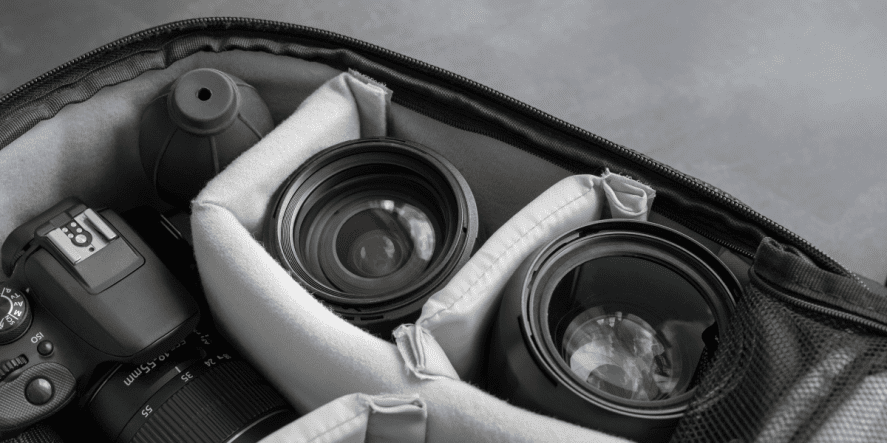
- Place the heaviest item, usually the camera body with a lens attached, at the bottom center of the bag for balance
- Use padded dividers to keep lenses separated so they don’t knock against each other
- Store batteries, memory cards, and cables in small labeled pouches or side pockets for quick access
- Keep a lens cloth and rain cover in an outer pocket, since digging through the main compartment wastes time mid-shoot
- Pack a laptop or tablet in a dedicated padded sleeve, away from any camera body, if the bag has a laptop compartment
- Leave a little extra room for a jacket, water bottle, or new lens picked up along the way
Smart Tips to Keep Your Camera Bag in Great Condition
A quality camera bag can last for years with proper care. Regular maintenance keeps it looking good while helping protect your photography equipment.
- After every outdoor trip, remove dust and dirt using a soft brush or microfiber cloth. If the bag becomes muddy, wipe it gently with a damp cloth and allow it to air dry completely before storing your equipment.
- Avoid placing the bag on rough concrete or sharp surfaces whenever possible. Although premium camera bags are built with durable materials, repeated abrasion can wear down the base over time.
- Check zippers regularly to remove dirt or sand that may affect smooth operation. If your bag includes removable dividers, take them out occasionally and clean the interior to remove dust and debris.
- Do not leave camera bags inside parked vehicles during extremely hot weather. High temperatures can affect batteries, memory cards, adhesives, and other sensitive equipment stored inside.
- When the bag is not in use, store it in a cool, dry location away from direct sunlight. This helps preserve fabrics, padding, and stitching for years of reliable use.
Frequently Asked Questions
1. How many lenses can a camera bag hold?
This depends on bag size and design. Small shoulder bags hold one or two lenses, mid-size backpacks hold three to five, and large professional backpacks with modular dividers can carry six or more lenses along with a camera body.
2. Are camera backpacks better than shoulder bags?
Backpacks distribute weight across both shoulders, making them better for heavy kits and long days. Shoulder bags offer faster access for quick shots. The better choice depends on gear weight, shoot length, and how fast a photographer needs to reach their camera.
3. What features make a camera bag travel-friendly?
Look for carry-on compatible sizing, locking zippers, weather-resistant material, and padded dividers that protect gear during handling. A structured shape that holds up under airport stacking and a comfortable strap system for long walks through terminals also matter.
4. How to organize gear inside a camera bag?
Place the heaviest item at the bottom center, use padded dividers to separate lenses, and store small items like batteries and cards in labeled pockets. Keep frequently used gear near the top or side access points for faster reach.
5. Do camera bags come with laptop compartments?
Many mid-size and large backpacks include a padded laptop sleeve, usually along the back panel closest to the wearer’s body for extra protection. Smaller shoulder bags and slings rarely include this feature, so check specs before buying one for travel work.
Final Thoughts
The right camera bag does more than carry gear from one place to another. It protects an investment worth carrying carefully, keeps everything organized during a shoot, and holds up to daily use across Pakistan’s mix of heat, dust, and sudden rain.
There is no single camera bag that works perfectly for everyone. The right choice depends on your equipment, shooting style, travel habits, and personal preferences. A landscape photographer hiking along mountain trails has different needs from a wedding photographer working in indoor venues or a content creator filming in cafés.
If you’re planning to upgrade your photography equipment, it is equally important to invest in a quality bag that offers long-term protection and convenience. To compare the latest DSLR camera bag prices in Pakistan, browse a wide range of options at Golden Camera designed for beginners, enthusiasts, and professional photographers.