Blog
Nikon Z50 II vs Z50 Comparison

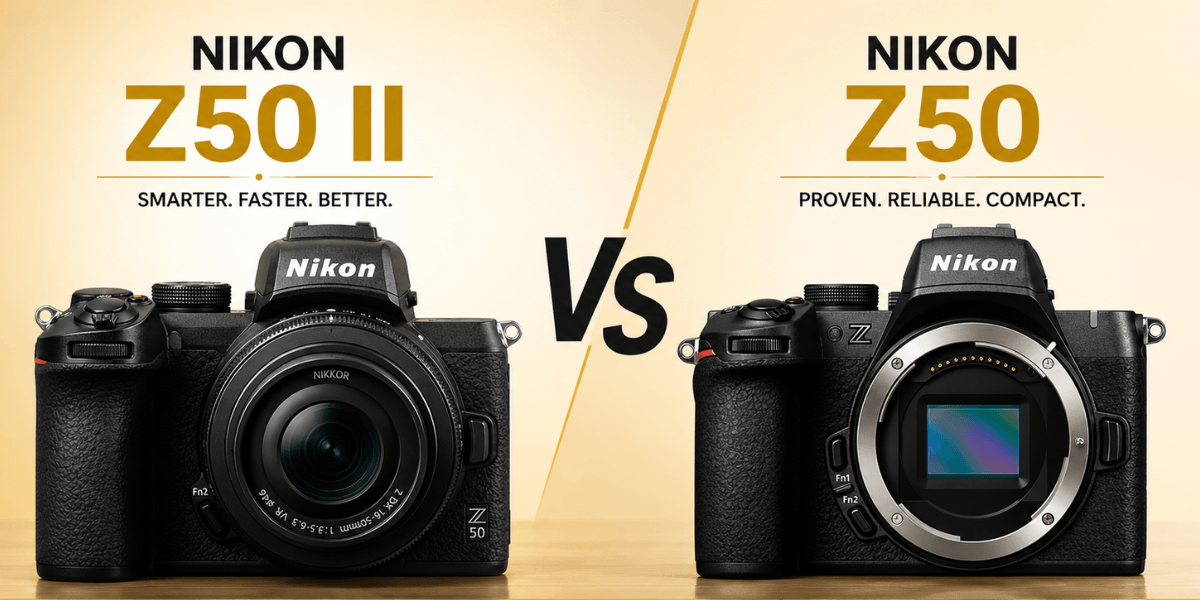
When you’re shopping for a mirrorless camera, the decision between two similar models can feel overwhelming. The Nikon Z50 II and its predecessor, the Z50, are excellent entry-level mirrorless cameras that have captured the hearts of photography enthusiasts worldwide.
But here’s the real question: do you need the newer model, or is the original Z50 still a solid choice? Let’s dive into what sets these two cameras apart and help you make an informed decision.
Understanding the Core Differences Between the Z50 and Z50 II
The Nikon Z50 II vs Z50 debate often starts with one fundamental question: what has actually changed? Both cameras share the same APS-C sensor format and the Z-mount, but Nikon made meaningful improvements to the newer model that affect how you’ll use the camera day-to-day.
The Z50 II introduces a more powerful processor and enhanced autofocus capabilities, giving it a noticeable edge in performance. While the original Z50 featured 209 autofocus points, the Z50 II uses Nikon’s newer autofocus system with 1,125 phase-detection points and significantly improved subject recognition, making it faster and more reliable at tracking subjects.
The processor upgrade also means faster continuous shooting speeds and improved video capabilities, which we’ll explore in more detail below.
Quick Comparison Table
| Feature | Nikon Z50 | Nikon Z50 II |
| Sensor | 20.9 MP APS-C | 20.9 MP APS-C |
| Autofocus Points | 209 | 1125 |
| Continuous Shooting | 10 fps | 11 fps |
| Video Resolution | 4K UHD up to 30fps | 4K UHD @ 30fps |
| Slow-Motion Video | Limited | 1080p @ 120fps |
| Processor | Expeed 6 | Expeed 7 |
| ISO Range | 100-51200 | 100-51200 |
| Microphone Input | Yes | Yes (3.5mm) |
| Connectivity | Micro-USB | USB-C |
| Eye-Detection AF | Yes | Yes |
| Battery Life | Approx. 330 shots | Approx. 340 shots |
| Weight | 450g | 450g |
This table provides a clear overview of how these cameras stack up, making it easier to spot the differences at a glance. Now let’s dive deeper into what these specifications actually mean for your photography.
Autofocus Performance and Speed
The Z50 II’s notable upgrade is its autofocus system, which is faster and more reliable in various light conditions thanks to an improved algorithm. It’s especially beneficial for shooting fast-moving subjects like wildlife, sports, or pets. The Z50 II improves Eye-Detection AF performance and subject recognition compared with the original Z50.
Image Sensor and Resolution
Both cameras share the same 20.9-megapixel APS-C sensor, which might surprise some people. The resolution remains identical, so you’re not getting higher megapixel counts with the Z50 II. However, the improved image processor delivers better overall image quality at high ISOs, cleaner files, and improved color rendering in the newer model.
Video Capabilities
If you’re interested in video content creation, this is where ‘what is the difference between the Nikon Z50 and Z50 II’ becomes particularly important.
The Z50 and Z50 II shoot 4K UHD video at 30 fps, perfect for social media and professional applications. Both cameras support electronic VR, while compatible VR lenses help provide smoother handheld footage. While Z50 II does more than its predecessor. With enhanced video processing, better autofocus during video capture, and more creator-oriented video features, the Z50 II surely gets all the praise here.
Frame Rates and Recording Flexibility
The Z50 II provides more frame rate options, enabling slow-motion and broadcast standard matching. It records 1080p at 120 fps for creative slow motion. The original Z50 was adequate for casual video but limited for more advanced use.
Audio and Connectivity Improvements
The Z50 II added a 3.5mm microphone input, essential for content creators, as external mics enhance audio quality over built-in options. It also has USB-C for faster transfers and charging, replacing the Z50’s micro-USB.
A Practical Perspective
Now we get to the question that really matters: Is the Nikon Z50 II worth upgrading? The answer depends entirely on your actual needs and how you use your current camera.
If you’re a still photographer focusing on natural light and not needing 4K video, the Z50 is a great choice. It offers exceptional image quality at reasonable ISO settings, access to Nikon’s Z-mount lenses, and greater affordability, making it ideal for budget-conscious users.
If video is key, or you’re working with fast-moving subjects that need better autofocus or the latest features, the Z50 II is a solid investment. Its improved processor and autofocus will serve you well as your skills grow.
Performance Metrics and Handling
The Z50 II shoots at higher fps, slightly faster than the Z50’s 10 fps, which improves overall performance during active shooting. Its battery life is also marginally better, though both need regular charging with heavy use. Handling feels the same due to similar ergonomics. Both are compact, lightweight, and ideal for travel.
Build Quality and Durability
Both the Z50 and Z50 II feature similar construction quality with magnesium alloy bodies that feel professional and durable. Neither camera has a weather-sealed body; they’re not designed for heavy rain or extreme conditions. If you frequently work in harsh environments, you might need to invest in protective solutions regardless of which model you choose.
Lens Compatibility and the Z-Mount Advantage
Both the Z50 and Z50 II share Nikon’s Z-mount, allowing all Z-mount lenses to be used on either. Nikon’s Z-mount lineup continues to grow with quality options across price points. Choosing these models means investing in a system that expands with you. The FTZ adapter also enables the use of Nikon’s F-mount lenses, though autofocus may be limited on older models.
When you’re ready to explore your options, including the price of Nikon Z50 II in Pakistan, Golden Camera offers competitive pricing and reliable service to photographers across the country. Our selection of cameras and accessories makes us a trusted resource for finding the right equipment for your needs.
Real-World Usage Scenarios
Let’s look at practical situations where each camera excels:
The original Z50 remains perfect for:
- Travel photography where weight matters
- Still-life and landscape work
- Learning fundamental photography principles
- Budget-conscious enthusiasts
The Z50 II is ideal for:
- Content creators who need video capabilities
- Sports and wildlife photography require fast autofocus
- Professional-oriented amateurs
- Users who want cutting-edge features
Customer Feedback and User Experiences
Users who’ve upgraded from the Z50 to the Z50 II consistently mention the autofocus improvements as transformative. Those who haven’t upgraded report satisfaction with their original Z50, particularly if they don’t need 4K video or advanced autofocus tracking.
Long-Term Value Proposition
Consider your photography journey over the next three to five years. Will you outgrow the Z50’s capabilities, or will they serve your needs indefinitely? The Z50 II offers more headroom for growth, while the Z50 remains an excellent, timeless choice if your needs are straightforward.
Final Thoughts
The Nikon Z50 II vs Z50 comparison ultimately comes down to your priorities, budget, and vision for your photography. There’s no objectively “better” camera; only the better choice for your needs.
The Z50 offers great value with high-quality images and a compact design, ideal for budget-conscious users. The Z50 II provides performance upgrades for long-term investment and tech advances. Both suit photographers who value quality without professional features, produce stunning images, and last if cared for. The choice depends on matching features to your workflow and goals.
When you’re ready to make your purchase, remember that the price of the Nikon Z50 in Pakistan is accessible through Golden Camera, where their knowledgeable team can help you choose between these outstanding options based on your specific needs. Choosing the Z50 or Z50 II aligns with the experience of many satisfied photographers over the years!