
Blog
Difference Between DJI RS 5 vs DJI RS 4 Pro

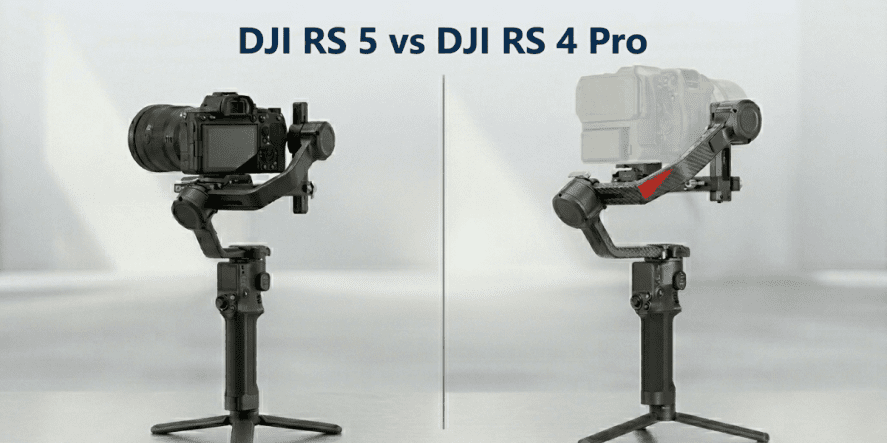
If you’ve been trying to decide between the DJI RS 5 vs RS 4 Pro, you’re not alone. Pakistani content creators, videographers, and filmmakers are asking this exact question, and the answer isn’t as straightforward as you might think. Both gimbals carry the prestigious DJI Ronin name and deliver outstanding stabilization, but they are built for very different users with distinct workflows. So let’s break it all down to help you make the right call!
A Quick Look at Where These Two Gimbals Come From
The DJI RS 5 was released following the RS 4 and RS 4 Pro, which launched in April 2024. The RS 5 had its worldwide premiere on January 29, 2026, introducing changes that genuinely increased the convenience of working with the device. The RS 4 Pro, on the other hand, quickly became the go-to flagship stabilizer for creators working with heavier cinema-grade rigs. Now that the RS 5 is here, the conversation has shifted, and rightfully so.
DJI RS 5 Features: What’s New and Why It Matters
The DJI RS 5 packs some incredible features. Learn about them:
5th-Generation Stabilization Algorithm
This is the biggest headline for the RS 5. DJI claims the RS 5 delivers 50% more peak motor torque compared to the RS 4, which is a leap. Higher torque means the motors can resist sudden movements more effectively, powered by the 5th-generation RS Stabilization Algorithm, specifically optimized for fast walking and running, vertical shooting, and low-angle briefcase mode.
For videographers in Pakistan constantly moving between tight shooting locations, this real-world stabilization improvement is genuinely meaningful.
The Z-Axis Indicator
The on-screen Z-Axis indicator shows you, in real time, how much vertical movement you’re introducing as you walk. When filming solo, that kind of feedback is genuinely helpful; it reminds you to slow down or adjust your steps. It’s the kind of detail that doesn’t appear on a spec sheet but makes a real difference during a long shoot day.
Battery Life Gets a Serious Upgrade
The RS 5 features a 33.29 Wh battery, up from 21 Wh in the RS 4. The optional BG70 High-Capacity Battery Grip extends runtime to approximately 30 hours with 45W PD fast charging, and the USB-C port supports up to 60-watt charging input.
Payload and Compatibility
The DJI RS 5 has a load capacity of 3 kg (6.6 lbs) and weighs approximately 1.46 kg with the battery grip. It also added compatibility for two new brands: Fujifilm and Panasonic. For Pakistani creators running Sony, Canon, Nikon, Fujifilm, or Panasonic mirrorless systems, the RS 5 handles practically every mainstream setup with ease.
DJI RS 4 Pro: Still a Powerhouse for Heavy Rigs
The DJI RS 4 Pro is a powerful device, perfect for professionals working with heavy rigs.
The Payload Advantage
Equipped with carbon-fiber axis arms, the DJI RS 4 Pro boasts a 4.5 kg (10 lbs) payload capacity and robust power and torque, easily accommodating mainstream mirrorless and cinema camera setups. If your rig includes a cinema camera, a large lens, a matte box, and a follow focus system, the RS 4 Pro is built to handle that kind of weight.
LiDAR Autofocus
The DJI RS 4 Pro integrates Focus Pro LiDAR Autofocus with 76,800 ranging points, a 77% increase from the previous generation, and can detect subjects up to 20 meters away. For documentary filmmakers or wedding videographers needing precise autofocus at a distance, this is a standout feature.
Battery Runtime
The RS 4 Pro’s battery grip provides a maximum runtime of 13 hours. When paired with the DJI RS BG70 High-Capacity Battery Grip, runtime extends to 29 hours. That’s an impressive figure for long-form production work, and the fast charging time means you’re never waiting long to get back on set.
RS 4 Pro vs RS 5 Gimbal: Head-to-Head

Head-to-head comparison of RS4 Pro and RS5. Read about it below:
Stabilization Intelligence
The RS 5 wins this round clearly. While the RS 4 Pro reacts to shakes, the DJI RS 5 uses its newer AI algorithm to predict movement, distinguishing between a step and a stumble while walking and smoothing out jitter during running that the RS 4 used to.
Weight and Portability
The RS 5 is lighter and more compact. It folds down smaller and fits more easily in a backpack, whereas the RS 4 Pro is considerably bulkier. For Pakistani videographers who frequently move between locations, portability can be a deciding factor.
Vertical Shooting
Both gimbals support native vertical shooting, but the RS 5 handles it more fluidly. Vertical shooting is better on the RS 5, and that matters a lot if most of your content is headed for TikTok or Reels. The RS 4 Pro is primarily optimized for horizontal cinematic work, though its redesigned gimbal horizontal plate allows a switch to vertical shooting without additional accessories.
Comparison Table b/w RS 5 vs RS 4 Pro:
Review this comparison table between the RS 5 and the RS 4 Pro. Details are provided below.
| Feature / Aspect | DJI RS 5 | DJI RS 4 Pro |
| Release Timeline | Launched January 29, 2026 | Launched April 2024 |
| Target Users | Content creators, solo shooters, social media videographers | Professional filmmakers, heavy rig users |
| Stabilization System | 5th-generation RS stabilization algorithm with predictive AI | Advanced stabilization (reactive, not predictive) |
| Motor Torque | ~50% higher peak torque than RS 4 | High torque, optimized for heavy setups |
| Z-Axis Indicator | Yes (real-time vertical movement feedback) | Not available |
| Payload Capacity | 3 kg (6.6 lbs) | 4.5 kg (10 lbs) |
| Weight | Approx. 1.46 kg (with battery grip) | Heavier and bulkier design |
| Portability | More compact, travel-friendly | Less portable due to size |
| Battery Capacity | 33.29 Wh | 21 Wh (standard grip) |
| Max Battery Runtime | Up to ~30 hours (with BG70 grip) | Up to ~29 hours (with BG70 grip) |
| Charging | 45W PD fast charging, supports up to 60W USB-C input | Fast charging supported |
| Autofocus System | Standard compatibility | LiDAR autofocus with 76,800 points, 20m range |
| Camera Compatibility | Sony, Canon, Nikon, Fujifilm, Panasonic | Broad support for mirrorless & cinema cameras |
| Vertical Shooting | More fluid and optimized | Supported, but more cinema-focused |
| Best Use Case | Travel, weddings, YouTube, TikTok, solo shooting | Cinema rigs, documentaries, heavy production setups |
| Key Advantage | Smarter stabilization, lighter build, better for mobility | Higher payload, LiDAR autofocus, pro cinema use |
| Overall Verdict | Best for most creators in 2026 | Best for heavy-duty professional workflows |
Which One Should You Buy?
The DJI RS 5 is the choice for content creators; it boasts a lightweight design and swift subject tracking for faster turnaround on social feeds, making solo filming a real possibility. Meanwhile, the RS 4 Pro is designed for filmmakers with heavy kits, supporting cameras up to 10 pounds and shining during independent reporting or filmmaking.
For professionals running heavy cinema rigs where the RS 4 Pro’s extra payload capacity is genuinely required, that model still makes a compelling case. For most Pakistani videographers, wedding shooters, travel filmmakers, YouTubers, and social content creators, the RS 5 is the smarter investment in 2026. You’re getting next-generation stabilization technology that will stay relevant longer.
If you want to check the latest price for the DJI RS5 gimbal in Pakistan, head over to Golden Camera, a trusted destination for professional camera gear. We also offer the DJI RS4 Pro at affordable rates.
Final Thoughts
The DJI RS 5 vs RS 4 Pro debate ultimately comes down to your specific needs. For solo creators and social-first videographers, the DJI RS 5 features predictive stabilization, faster charging, a smarter algorithm, and a lighter design, making it the more forward-thinking choice in 2026.
The RS 4 Pro vs RS 5 gimbal comparison isn’t about which is universally better; it’s about which one fits your workflow. Run this comparison against your actual camera rig and shooting style, and the right answer will become clear. If you want to find the best price on a camera gimbal in Pakistan, Golden Camera carries the full DJI lineup and can help you match the right stabilizer to your specific setup. Check out our catalog to learn more!