
Blog
Sony PXW Z-200 vs Z-280 – Which One to Choose?

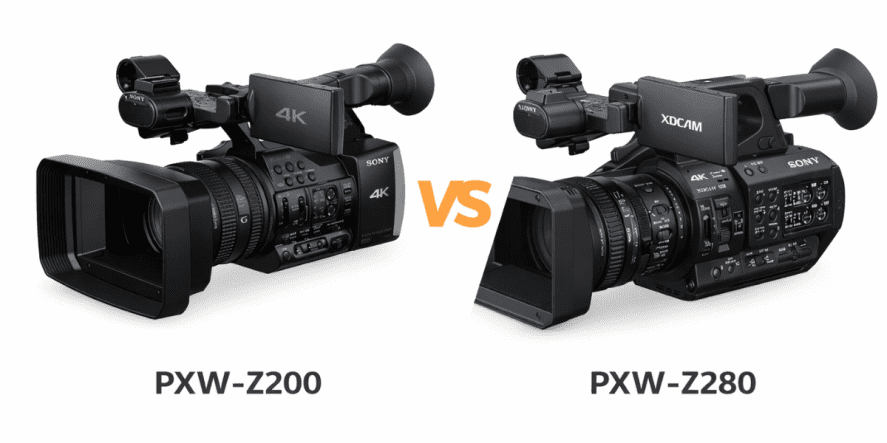
There are moments in video production when you must choose the right tool for your creative vision. That choice often comes down to two outstanding Sony camcorders: the Sony PXW-Z200 and the Sony PXW-Z280. Both camcorders are professional-level, reliable, and suitable for broadcast and documentary work. Yet they have distinct strengths that make them better suited for certain projects.
If you shoot interviews, live events, corporate videos, or educational films, this detailed Sony PXW Z-200 vs Z-280 comparison will help you make a smart choice that fits your workflow and budget.
Features of Sony PXW Z-200
The Sony PXW-Z200 is a professional handheld camcorder designed for high-quality 4K HDR video capture, offering excellent image performance, versatile zoom capabilities, and advanced features tailored for broadcast, events, and solo shooting.
- Large 1.0-type Exmor RS stacked CMOS sensor with ~14MP effective resolution, paired with BIONZ XR processing for sharp 4K HDR footage, rich colors, low noise, and strong low-light performance via 5K oversampling.
- 20x optical zoom G Lens (equivalent to 24-480mm in 35mm full-frame), with Clear Image Zoom extending to 30x in 4K and 40x in HD for flexible wide-to-telephoto shooting.
- Advanced Fast Hybrid AF with AI-powered Subject Recognition for precise, reliable tracking of human subjects, plus Auto Framing to automatically keep subjects centered, ideal for solo operators.
- Built-in variable electronic ND filter for easy exposure control in changing light conditions without swapping filters.
- Strong image stabilization (Active Mode) combined with smooth power zoom for steady handheld or run-and-gun footage.
- Connected workflows featuring integrated dual-band Wi-Fi (2.4/5 GHz), 12G-SDI output, HDMI, timecode I/O, and support for live streaming (RTMP/RTMPS/SRT) plus remote control via Sony’s Monitor & Control app.
- Professional recording options including XAVC codecs (up to 4K 120fps), S-Cinetone and S-Log3 profiles for cinematic color matching, dual media slots (CFexpress Type A/SDXC), and broadcast-friendly features like MXF wrapping (via firmware).
Features of Sony PXW Z-280
The Sony PXW-Z280 is a professional handheld 4K XDCAM camcorder renowned for broadcast-grade performance, featuring a three-sensor system for superior color accuracy, deep depth of field, and high dynamic range, paired with versatile manual controls ideal for demanding productions.
- Three 1/2-type Exmor R CMOS sensors (3-chip design) for independent capture of red, green, and blue channels, delivering exceptional resolution, high sensitivity (F12 at 59.94p), wide dynamic range, low noise, and accurate color reproduction in 4K HDR.
- 17x professional optical zoom lens (focal length 5.6–95.2mm, 35mm equivalent 30.3–515mm) with three independent control rings (focus, zoom, iris) featuring end-stops for precise, intuitive manual adjustments and fast operation.
- Advanced recording formats including XAVC Intra, XAVC Long, MPEG HD 422, and support for up to 4K 60p/50p, with 10-bit 4:2:2 color sampling for high-quality broadcast and post-production workflows.
- HDR capabilities via Hybrid Log-Gamma (HLG) and S-Log3 profiles for flexible grading and cinematic looks in post.
- Broadcast-ready connectivity with 12G-SDI output (supports 4K 60p), HDMI, dual SxS card slots for simultaneous or relay recording, and built-in dual-band Wi-Fi (2.4/5 GHz) for wireless workflows and streaming.
- Electronic variable ND filter for seamless exposure control in varying light without external filters, enhancing run-and-gun flexibility.
- Additional pro features like Face Detection AF, high-quality audio with dual XLR inputs, and robust build for studio, live production, or field use.
As Alister Chapman, a renowned professional photographer and videographer, stated, “The Z280’s OLED EVF provides a bright, high-resolution image, and I found myself using it a lot to check focus and exposure.”
Advanced networking features on this camera bring Wi-Fi and even cellular connectivity for fast file transfer on set. These network tools are useful when working with remote production teams.
Stream live or record in stunning quality. The Sony PXW Z-280 is a complete production tool with built-in streaming and pro audio controls. Your all-in-one studio solution is available at Golden Camera at budget-friendly pricing.
Sony PXW Z-200 vs Z-280: A Detailed Comparison
Continue reading to explore key differences in sensor technology, zoom range, autofocus features, low-light performance, connectivity, and which camcorder suits your shooting needs better.
1. Image Sensor and Quality
A major point in any Sony PXW Z-200 vs Z-280 comparison is the sensor. The Z-200’s 1.0-type sensor delivers strong low-light performance and shallow depth-of-field control, helping blur backgrounds and isolate subjects creatively. The Z-280’s three 1/2-type sensors support broadcast-style color separation and a broad dynamic range, often preferred in news and enterprise video.
2. Zoom and Lens
The Z-200’s 20x zoom extends farther in equivalent focal length than the Z-280’s 17x optical zoom, giving it a slight edge in wildlife, event, and documentary shooting where reach matters. The Z-280’s lens, however, is faster (wider maximum aperture) and offers more manual control for professional hands.
3. Workflow and Integration
The Z-280 was designed with broadcast workflows in mind. Dual SxS slots, advanced codec support, and flexible network tools make it easier to manage large productions. The Z-200 remains excellent for solo creators and smaller crews, thanks to AI tools and streamlined workflows.
4. Portability vs Power
Physically, the PXW-Z200 is slightly lighter and more compact, making it great for mobile shooters. The PXW-Z280 is larger and more traditional in form factor, meant to be part of a kit you use consistently on set or in a studio.
Sony PXW Z-200 vs Z-280: Comparison Table
| Feature | Z‑200 | Z‑280 |
| Sensor Type | Large 1.0‑type Exmor RS CMOS | Three 1/2‑type Exmor R CMOS |
| Zoom Lens | 20x Optical (24–480 mm equiv) | 17x Optical |
| Best Use Case | Solo shooters, run‑and‑gun | Broadcast and ENG productions |
| Color Processing | Single sensor with strong low‑light | Triple sensors for color accuracy |
| Connectivity | Wi‑Fi, 12G‑SDI | Wi‑Fi, 12G‑SDI, advanced networking |
| Recording Formats | XAVC, MPEG | XAVC‑Intra, XAVC‑Long, HD422 |
| Ideal For | Event, corporate, streaming | News, documentary, studio |
| Size & Weight | More compact | Larger, traditional body |
Which Sony PXW Camcorder is Right for You?
Sony PXW Z-200
If you are a solo videographer capturing live events, weddings, or corporate videos, the Sony PXW Z-200 hits a sweet spot with its AI focus tools and longer zoom range. Its built-in stabilization and streaming support also help when you work without a dedicated crew.
Sony PXW Z-280
The Sony PXW Z-280 suits broadcast news teams, documentary projects with larger crews, and corporate productions that need robust codec support and reliable audio recording. Triple sensors and deep manual controls appeal to seasoned professionals.
FAQs
1. What are the key differences between Z-200 and Z-280?
The biggest differences are the sensor and workflow design. Z-200 uses a large 1-inch sensor that excels in low light and reaches with a 20x zoom. Z-280 uses three 1/2-inch sensors for deep color and broad dynamic range with flexible broadcast codec options. Both suit professional use but appeal to different shooting styles.
2. Which camcorder is better for live streaming?
Both cameras support live streaming through Wi-Fi and wired connections. The Z-200’s simple streaming setup makes it easier for solo operators, while the Z-280’s advanced networking and codec support is ideal for corporate and broadcast streaming environments.
3. Can both cameras record 4K video?
Yes. The Sony PXW Z-200 captures 4K up to high frame rates with 5K oversampling quality. The Sony PXW Z-280 records 4K at up to 60p with deep color and HDR workflows supported.
4. How does the audio quality compare on Z-200 vs Z-280?
Both models have professional audio support with XLR inputs and multiple channels. Z-280 provides independent volume dials and more networking options, which can help in controlled studio environments. Z-200 is solid for handheld field recording.
5. Which camera is better for corporate videography?
For corporate gigs, Z-280’s broadcast heritage and flexible recording formats give it an edge. However, Z-200 also performs well for smaller corporate teams that benefit from its ease of use and AI tools.
Wrap-Up
In this Sony PXW Z-200 vs Z-280comparison, there is no universal best choice. Each model serves a particular type of creator and production need. The Z-200 blends power with usability and is ideal for independent shooters, while the Z-280 leans into broadcast workflows and traditional ENG requirements. Your final decision should reflect your production style, preferred workflows, and long-term plans for video creation.
For a balanced blend of agility and quality, Z-200 is a favorite among solo shooters. If you want deeper control and a broadcast pedigree, Z-280 holds its ground as a robust workhorse.
Ready to upgrade your video gear? Go through our selections today and find the best deals on professional camcorders like the Sony PXW Z-200 and PXW Z-280. Get expert advice and unmatched gear for all your photography needs.