
Blog
Wide Angle vs. Telephoto Lens Explained

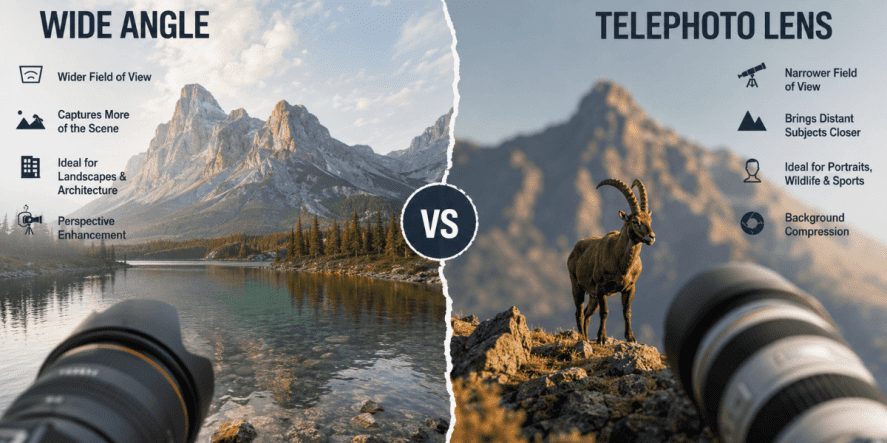
The lens shapes the final image more than most beginners expect. It changes perspective, depth, framing, compression, and even the emotional feel of a photograph. Some lenses capture wide scenes in a single shot, while others bring distant subjects closer with sharp detail. That is where the discussion of wide vs. telephoto lenses becomes important for photographers, videographers, travelers, wildlife shooters, and content creators.
Many people entering photography get confused when choosing between these two lens types because each serves a completely different purpose. Knowing the strengths of each lens helps photographers avoid buying equipment that does not match their shooting style.
Picking the Right Lens for Different Photography Styles
Every photography category depends heavily on focal length. Landscape photographers often need a lens that captures mountains, skies, buildings, or interiors in a single frame. Sports photographers need reach and subject isolation. Portrait shooters may prefer natural compression and softer background blur. This is why understanding the difference between a wide-angle and a telephoto lens matters before spending money on equipment.
A Nikon guide explains that focal length directly affects perspective and image composition, making lens choice one of the most important creative decisions in photography.
Wide-angle lenses usually have a focal length below 35mm. Telephoto lenses typically start around 70mm and extend far beyond 200mm. Both can produce stunning images, but the final result changes dramatically depending on the subject and shooting distance.
Wide Angle Lens vs. Telephoto Lens: Key Differences at a Glance
The conversation usually starts with focal length, but the real differences lie in framing, compression, background blur, perspective, and working distance. Continue reading to understand how each lens changes the final image in real shooting conditions.
1. Field of View
A wide-angle lens captures a much broader scene. This makes it useful for landscapes, city photography, interiors, and travel shots. It allows photographers to fit more content inside the frame without stepping backwards.
Telephoto lenses are characterized by a narrower field of view, achieved through longer focal lengths, which makes distant subjects appear closer while compressing background elements into a tighter frame, as explained in Canon’s official lens guidance on focal length and angle of view.
Sports photographers and wildlife shooters rely on this narrow framing because subjects are often far away.
2. Perspective and Compression
Wide-angle lenses dramatically emphasize the distance between foreground and background elements, making them an essential tool for impactful photography. Objects positioned closer to the lens undeniably appear larger, while those farther away clearly appear smaller. This creates dramatic depth in landscape photography.
Telephoto lenses compress perspective. Background elements appear closer to the subject, making scenes feel tighter and more layered. Portrait photographers often prefer this effect because facial proportions look more natural at longer focal lengths.
3. Working Distance
Wide-angle lenses require photographers to move physically closer to subjects. This creates intimacy and environmental context, but can distort facial features if used too closely.
Telephoto lenses allow photographers to shoot subjects from far away. This is especially useful in wildlife, sports, journalism, and stage performances where physical access is limited.
The working distance factor often determines the winner in the wide-angle vs. telephoto lens debate among professionals.
4. Background Blur and Depth
Telephoto lenses generally create stronger background blur due to their longer focal lengths and narrower angles of view. This makes subjects stand out cleanly against soft backgrounds.
Wide-angle lenses keep more of the scene in focus. Even at wider apertures, they tend to show greater depth throughout the image. This helps landscape photographers keep both foreground rocks and distant mountains sharp.
5. Distortion
Wide-angle lenses can produce visible distortion near frame edges. Straight lines may curve outward, especially in ultra-wide lenses. Architecture photographers often correct this during editing.
Telephoto lenses produce far less visible distortion. Subjects usually appear flatter and more natural in shape.
For beginners studying the wide-angle lens vs. telephoto lens topic, distortion is an important thing to understand before buying equipment.
Wide Angle vs. Telephoto Lens: Understanding the Real Visual Difference
The comparison becomes clearer when viewing both side by side. One creates openness and dramatic depth. The other creates focus and compression. Both are powerful tools, but they tell stories differently.
According to National Geographic, wide angle lenses capture a broader view than human vision, making them suitable for landscapes and interiors, though they can introduce curved line distortion that adds artistic effect. Telephoto lenses act as powerful magnifiers, bringing distant subjects closer and are commonly used for wildlife and sports photography.
Let’s understand the basic differences between a wide-angle and telephoto lens:
| Feature | Wide Angle Lens | Telephoto Lens |
| Focal Length | Usually 35mm or below | Usually 70mm and above |
| Field of View | Very broad | Narrow |
| Best For | Landscapes, interiors, travel | Wildlife, sports, portraits |
| Perspective | Expands depth | Compresses distance |
| Background Blur | Less intense | Stronger subject isolation |
| Distortion | More visible at edges | Minimal distortion |
| Working Distance | Requires closeness | Allows distant shooting |
| Weight | Often lighter | Usually heavier |
| Price Range | More affordable in many cases | Often more expensive |
| Common Use in Video | Vlogging and handheld shots | Interviews and cinematic close-ups |
For those upgrading camera gear, Golden Camera is the best camera shop, featuring top global brands and offering photographers the right lens choices for wide-angle storytelling or telephoto reach in both professional and creative photography.
Where Wide Angle Lenses Perform Best
Wide-angle lenses remain favorites among travel photographers, vloggers, and landscape creators because they capture large scenes naturally.
1. Landscape Photography
A wide lens can capture mountains, rivers, skies, and foreground details in a single image. The exaggerated depth makes landscapes feel immersive and dramatic.
2. Architecture and Interiors
Real estate and architectural photography depend heavily on wide focal lengths because small spaces need broader framing. Interior photographers often use 16mm to 24mm lenses for room coverage.
3. Street Photography
Wide lenses place viewers close to the action. Street photographers often prefer 28mm or 35mm because these focal lengths create a natural storytelling feel.
4. Vlogging and Content Creation
Wide lenses dominate the vlogging market because they fit both the subject and surroundings into the frame during handheld recording.
Where Telephoto Lenses Shine
Telephoto lenses excel when subjects are far away or when photographers want stronger background separation.
1. Wildlife Photography
Wildlife photographers often use lenses between 200mm and 600mm because animals cannot always be approached safely. According to Photography Life, wildlife photography often relies on focal lengths over 300mm to ensure subject safety and image detail.
2. Sports Photography
Sports shooters depend on telephoto reach to capture action happening across large fields or stadiums. Fast autofocus and long focal lengths are essential.
3. Portrait Photography
Portrait photographers often favor 85mm, 105mm, or 135mm lenses because these focal lengths flatter facial proportions and create creamy background blur.
4. Concert and Event Photography
Concert venues often limit physical movement. Telephoto lenses help photographers capture close details without standing near performers.
FAQs
- What is a wide-angle lens used for?
A wide-angle lens is mainly used for landscapes, architecture, travel photography, interiors, and vlogging. It captures a larger scene inside the frame and creates stronger depth between foreground and background elements. These lenses are popular for storytelling images that include surroundings and environmental details naturally.
2. What is a telephoto lens used for?
A telephoto lens is commonly used for wildlife, sports, portraits, concerts, and distant subjects. It magnifies faraway scenes and creates stronger background blur. These lenses help photographers isolate subjects clearly while shooting comfortably from a distance without physically moving closer to the action.
3. Which lens is better for beginners?
Beginners often start comfortably with a wide or standard zoom lens because it handles multiple photography styles easily. Telephoto lenses become useful later for sports, wildlife, or portrait work. The better option depends mainly on personal shooting interests, subject preferences, portability needs, and overall budget range.
4. Can I use a telephoto lens for portraits?
Yes, telephoto lenses are widely used for portrait photography because they create flattering facial proportions and softer background blur. Focal lengths like 85mm and 135mm are especially popular among portrait photographers. These lenses help subjects stand out cleanly without distracting background elements inside the frame.
5. What is the main difference between wide and telephoto lenses?
The main difference between wide and telephoto lenses is focal length and perspective. Wide lenses capture broader scenes and exaggerate depth. Telephoto lenses narrow the frame, compress distance, and magnify distant subjects. Each lens changes composition, background appearance, and subject isolation in very different creative ways.
Closing Summary
The discussion around wide-angle vs. telephoto lenses comes down to visual storytelling. Wide-angle lenses create openness, depth, and environmental context. Telephoto lenses create compression, subject isolation, and reach. Neither is universally better because each serves a different purpose.
Photographers who love landscapes, travel, architecture, and vlogging often lean toward wide lenses. Those focused on wildlife, portraits, sports, and events usually prefer telephoto options. Understanding the strengths of each lens helps photographers invest wisely and shoot with greater creative control.
Looking for professional camera gear at reliable rates? Golden Camera offers a strong collection of wide-angle, telephoto, portrait, and zoom lenses for photographers and content creators across Pakistan. Check the latest prices of camera lenses in Pakistan and shop confidently for authentic products.