
Blog
Are Phone Cameras better than DSLRs?

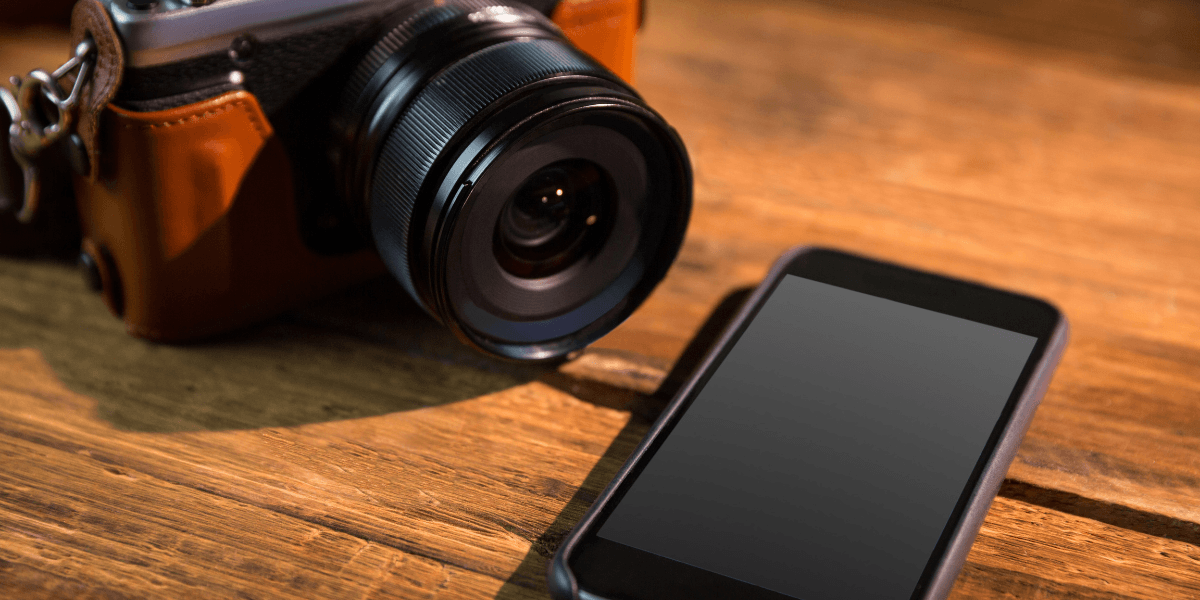
Choosing between a smartphone and a DSLR is no longer as straightforward as it once was. Modern phones now offer advanced features like AI processing, multiple lenses, and impressive low-light performance, while DSLRs continue to deliver unmatched control, image quality, and versatility. So, which one actually comes out on top? In this guide, we break down the key differences to help you decide whether a phone camera or a DSLR is the better choice for your needs.
The Rise of the Smartphone Camera
Not too long ago, pulling out a phone to shoot at a professional event would have earned you some awkward looks. Today, flagship smartphones ship with triple-lens systems, AI-powered computational photography, and video capabilities that rival those of broadcast-grade gear in certain applications.
CIPA data for 2025 shows a roughly 11% increase in digital camera shipments from 2024 alone. Smartphones took over everyday photography. But sales figures and convenience are two different things. Actual image quality is another.
Phone Camera vs DSLR: What the Numbers Actually Tell You
Here’s what the numbers actually tell you in a DSLR and a phone camera.
Sensor Size: The Physics Problem That Will Not Go Away
Here is where the phone camera vs DSLR debate gets genuinely interesting. A full-frame DSLR sensor measures approximately 36mm x 24mm. The main sensor on a flagship smartphone measures roughly 9.8mm x 7.3mm, with a surface area nearly 30 times smaller. A smaller sensor collects far less light per exposure, which cascades into weaker dynamic range, noisier high-ISO performance, and an inability to produce natural background blur without software faking it.
As DXOMARK notes, smartphones can collect only about 1/20 as much light as a DSLR for a given exposure time. No software wizardry fully closes a gap rooted in the laws of physics. A 2025 ScienceDirect pilot study comparing a Nikon Z5 against three flagship smartphones found that DSLR systems demonstrated superior performance in magnification, image resolution, and color accuracy across standardized test conditions.
Computational Photography: Smartphones Play a Different Game
Smartphones have responded to their physical limits with aggressive software. When you press the shutter on a 2026 flagship phone, it fires dozens of frames in a fraction of a second, runs them through an on-device AI model, and assembles the sharpest focus and best exposure before you lift your finger. Modern smartphones merge multiple exposures into a single image, achieving a dynamic range that can approach a DSLR in landscape conditions. A DSLR captures one raw frame and leaves the rest to you in post-processing. For casual shooters, phone handling is an automatic massive advantage.
A Smartphone vs DSLR Camera Comparison: Category by Category
Here’s a camera comparison between the two devices. Review it category by category below.
Image Quality and Print Size
For a smartphone vs DSLR camera comparison in well-lit conditions, the gap narrows considerably. Casual shots can be surprisingly hard to tell apart on a phone screen. The trouble starts when you push the files. Crop 80% out of a smartphone photo and print it at A2 size, and the smaller sensor runs out of road fast. A DSLR RAW file holds up remarkably well. For social media, a flagship phone is genuinely sufficient. For billboards or commercial campaigns, the DSLR wins without serious argument.
Low Light and High ISO
This is where the sensor size gap bites hardest. A full-frame DSLR at ISO 6400 still produces clean, usable images. A smartphone at the same sensitivity, even with Night Mode stacking exposures, tends to produce a smoothed-out, painterly result where fine texture should be. Shooters at concerts, indoor sports, and documentary work still reach for DSLRs because the light leaves no room for compromise.
If you are shopping for an affordable option, you can check out Golden Camera’s collection. We offer the best DSLR camera prices in Pakistan for working photographers.
Autofocus and Speed
Phase-detection autofocus on DSLRs can track moving subjects at 20 or more frames per second. Smartphones rely on contrast-detection systems that can hunt and hesitate in challenging lighting or when tracking fast-moving subjects.
As Melissa Perenson noted on TechRadar, in a real-world walkabout test, physical dials and wheels on a dedicated camera allowed far quicker and more reliable setting adjustments than any smartphone touchscreen. For sports and wildlife, it is not a close contest.
Portability
This is where phones win so decisively that it reshapes the whole conversation. A flagship phone weighs under 200 grams. A DSLR body alone sits around 800 grams before you add a lens and bag. As photographers often say, the best camera is the one you have with you. For most people, that is their phone.
Table Comparison b/w DSLR and Smartphone Camera
Go through this table comparison between DSLR and smartphone cameras. Learn about it below:
| Category | Smartphone Camera | DSLR Camera |
| Image Quality & Print Size | Excellent for social media and casual viewing on small screens. Struggles with heavy cropping and large prints (like A2). | Superior detail retention, especially in RAW. Handles heavy cropping and large-format prints with ease. |
| Low Light & High ISO | Uses Night Mode and computational photography, but often produces smoothed or artificial-looking results. | Performs exceptionally well at high ISO (e.g., ISO 6400), maintaining detail and clarity in low light. |
| Autofocus & Speed | Relies mostly on contrast-detection; it can struggle with fast-moving subjects and tricky lighting. | Phase-detection autofocus enables fast, accurate tracking, even at 20+ fps for action shots. |
| Portability | Extremely portable, lightweight (under 200g), always with you. | Bulky and heavier (around 800g body only), it requires additional lenses and gear. |
DSLR vs Smartphone Camera 2026: Who Has Kept Up?
The debate of DSLR vs smartphone camera in 2026 has shifted noticeably. Dedicated DSLRs have largely stopped evolving, with manufacturers redirecting resources toward mirrorless systems. Meanwhile, flagship phones keep pushing the boundary. The iPhone 17 Pro ships with three 48MP cameras, 8x optical zoom, and 4K 120fps Dolby Vision video, genuinely remarkable hardware for a 194-gram pocket device.
But pricing has crept up alongside capability. Entry-level DSLRs cost considerably less than the iPhone 17 Pro and still deliver image quality well above their price points.
Lens Flexibility and Creative Control
Why Interchangeable Lenses Still Matter
One of the most underrated advantages of DSLRs is their lens ecosystem. A Canon EF or Nikon F mount body gives you access to decades of glass, from ultra-wide landscapes to 500mm telephoto wildlife lenses and fast 50mm primes that deliver razor-thin depth of field. A phone gives you only what the manufacturer built in.
Manual controls on a DSLR, physical dials for aperture, shutter speed, and ISO, provide tactile precision that no touchscreen fully replicates. For photographers who have internalized the exposure triangle, this matters enormously.
Which Is Better for Photography? Honest Verdict
The question, ‘which is better: DSLR or phone camera,’ has no single right answer because the two tools serve overlapping but distinct purposes.
Choose a smartphone when you primarily shoot for social media, portability matters most, or you want AI-assisted results without manual adjustments.
Choose a DSLR when you need large-format print quality, shoot fast action or wildlife, work in challenging low light, or are building a professional portfolio with a full lens ecosystem behind you.
The sharpest photographers in 2026 are not arguing about which is superior. They are using both.
Frequently Asked Questions
Can a smartphone replace a DSLR camera?
For casual photography and social media, a modern flagship smartphone is more than adequate. For professional applications like large-format printing, fast-action sports, or commercial work requiring maximum image quality, smartphones have not replaced DSLRs. The sensor size gap, lens ecosystem, and autofocus speed of a dedicated camera system still offer real advantages that software alone cannot fully bridge.
Why do DSLR cameras still produce better quality?
The core reason is sensor size. A full-frame DSLR captures roughly 30 times more surface area than a typical smartphone sensor, collecting far more light per exposure. This delivers better dynamic range, cleaner high-ISO performance, and richer RAW files. DSLR systems outperform smartphones in magnification, resolution, and color accuracy under standardized conditions.
Are phone cameras good for professional photography?
It depends on the work. For content creators, journalists, and video bloggers, a flagship phone is professional-grade. For commercial advertising, large-format print, or wildlife photography, phones still fall short of dedicated DSLR or mirrorless systems. Many professionals carry both and assign each tool based on output requirements.
Which is better for video: phone or DSLR?
For social and online video, phones are outstanding in 2026, offering stabilized 4K, log profiles, and a seamless shoot-to-post workflow. For cinematic productions requiring RAW video, XLR audio, or high dynamic range at high ISOs, dedicated cameras remain the standard. The deciding factor is where the footage ends up.
Should beginners start with a phone or a DSLR?
Starting with a smartphone is a smart move. It removes the cost barrier, letting you focus on composition and light without being overwhelmed by manual settings. Once you feel genuinely limited by your phone’s output, stepping up to an entry-level DSLR is a natural progression that builds real technical skill.
Final Thoughts
The debate over the phone camera vs DSLR is not about which is technically better across every metric. Physics still gives the DSLR a genuine advantage in sensor size, light-gathering capacity, optical flexibility, and raw-file latitude. At the same time, computational photography has made modern smartphones astonishingly capable for the majority of real-world shooting scenarios.
If you shoot primarily for social media or everyday memories, a flagship phone is all you need. If you are a professional delivering commercial work or printing large, no phone has replaced the DSLR yet. The right choice is whichever tool matches the work you are actually doing.
For photographers evaluating their options, checking the prices of cameras in Pakistan across all categories at Golden Camera is essential for proper budgeting.