
Blog
Sony FX5 vs Sony FX3: Which Cinema Camera Should You Choose?

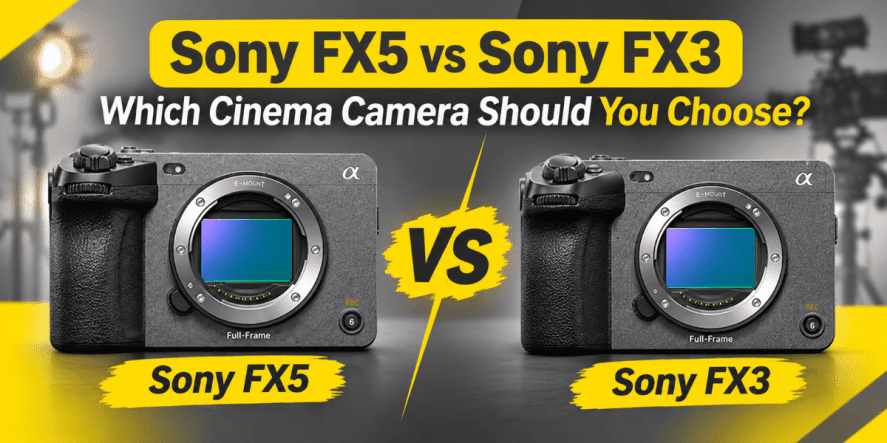
Weddings, documentaries, brand films, and music videos all demand a camera that is small, reliable, and flexible. For years, the FX3 filled that role well. Now Sony has introduced the FX5, and many filmmakers are asking if the newer model justifies a bigger investment. Looking at Sony FX5 vs Sony FX3 in detail will help you answer that with confidence.
Where Each Camera Sits in Sony’s Cinema Line
The FX3 arrived in 2021 as a compact full-frame cinema camera, and it quickly became a favorite among solo shooters and small crews. Sony announced the FX5 in July 2026, and it sits between the FX3 and the larger FX6. It keeps the compact body that FX3 owners know, but it changes much of what happens inside.
The FX5 is positioned as a compact option for creators who want cinema features without a box-style body. Compared with the FX6, it gives up the built-in variable ND filter and SDI output, which keeps the camera small and light.
Because the two cameras look similar, it is easy to assume that the upgrade is small. In practice, the sensor, recording options, and handling have all changed in meaningful ways.
Core Specifications Compared
The difference between Sony FX5 and Sony FX3 starts with the sensor, and the table below shows the most important points side by side.
| Feature | Sony FX5 | Sony FX3 |
| Sensor | 16.6MP stacked full-frame | Approximately 10.3MP effective for video (12.1MP for still images) |
| Maximum resolution | 5K Open Gate | 4K |
| Internal RAW | Yes, 16-bit X-OCN | No |
| Base ISO | Three (800, 4000, 12800) | Two (800, 12800) |
| Dynamic range claim | 15+ stops | 15+ stops |
| Mechanical shutter | No | Yes |
| Photo capture | No | Yes |
| Built-in ND filter | No | No |
| Weight with battery and card | 734g | 715g |
Two rows deserve extra attention. The dynamic range claims match at 15+ stops, so the FX5 does not promise a wider range on paper. Its gains come from resolution, recording formats, and sensor speed, while the FX3 holds its ground with a mechanical shutter and photo features.
Weight is nearly identical, and the two bodies share a similar form factor, so your existing handles, cages, and carrying cases should stay useful with either camera.
The Biggest Upgrades in the FX5
The FX5 introduces several important upgrades over the FX3. Here’s what has changed.
Stacked 5K Sensor
The FX5 uses a new 16.6MP stacked full-frame sensor with the BIONZ XR2 processor. A stacked design reads data faster, which reduces the rolling shutter distortion you see in fast pans. The extra resolution also gives you room to crop, reframe, or digitally stabilize footage.
Open Gate Recording
The FX5 supports Open Gate recording in a 3:2 aspect ratio using its full sensor area and X-OCN recording format. This provides additional image space for creating vertical social media clips, widescreen edits, and other aspect ratios from the same footage.
Its 5K 3:2 recording supports up to 30fps with Dual Gain Shooting, while 5K 16:9 and 17:9 modes support up to 60fps. Sony has also announced a planned firmware update for 5K 3:2 X-OCN recording at 120fps, starting in August 2027 or later.
Internal X-OCN RAW
The FX5 records 16-bit X-OCN RAW inside the camera in LT, C1, and C2 options. This format was previously available only on Sony’s higher-end VENICE 2 and BURANO cameras. You gain more grading flexibility without an external recorder, although the files need more storage space and faster cards.
Triple Base ISO
The FX5 offers three base ISO settings at 800, 4000, and 12800, along with Dual Gain Shooting. The FX3 provides two base values at 800 and 12800. The extra middle option helps in dim venues such as indoor events and evening locations. A suitable base setting helps keep the image cleaner without pushing gain too far in dark rooms.
Handling and Menus
The FX5 uses a cinema-style interface with a home screen built around frame rate, exposure, and LUT settings. It also has a 3.5-inch multi-angle touchscreen. The FX3 uses menus closer to Sony’s Alpha cameras, which feel familiar if you also shoot with a mirrorless body.
The FX5 also lists AI-powered autofocus and white balance along with five-axis sensor-shift stabilization, which helps solo operators who cannot always adjust settings by hand.
What the FX5 Leaves Out
Sony made a few deliberate trade-offs in the FX5. Some retailer listings also note that certain high-frame-rate Open Gate modes depend on a later firmware release, so confirm the current feature list before you buy.
No Mechanical Shutter or Photo Mode
The FX5 is a video-only camera. It drops the mechanical shutter and still photography, so you cannot use it as a dual-purpose body the way many FX3 owners do.
No Built-In ND Filter
Neither camera has an internal ND filter. Since Pakistan often has very bright daylight, plan to carry external ND filters for outdoor work with wide apertures.
Where the FX3 Still Makes Sense
The FX3 remains a capable camera with excellent low-light performance, dependable 4K recording, and professional audio support. Its mechanical shutter and photo mode suit hybrid shooters who deliver both stills and video.
The FX3 also tends to cost less than newer models, leaving more budget for lenses, lighting, audio gear, and a proper support system. For many everyday productions, those extras improve the final result more than a sensor upgrade.
Owners who already have lenses, cages, and a tested workflow around the FX3 may also find that keeping it avoids extra costs such as new batteries and a revised storage plan.
Which Camera Fits Your Work?
So, Sony FX5 or Sony FX3, which is better for your projects? The better choice depends on your production requirements and final delivery formats.
Choose the FX5 If You Need More Flexibility
Pick the FX5 when you shoot commercials, narrative work, or music videos that benefit from RAW grading and Open Gate framing. It also suits creators who deliver in multiple aspect ratios from a single recording.
Choose the FX3 If You Value Versatility
Pick the FX3 for weddings, documentaries, and hybrid jobs where photos and video both matter. Its familiar menus, mechanical shutter, and proven reliability keep your workflow simple.
Neither choice is wrong. The FX5 prepares you for RAW-based work and flexible framing, while the FX3 gives you a lower-risk and proven path.
Planning Your Purchase in Pakistan
Before buying either camera in Pakistan, consider these practical requirements.
Storage and Power
The FX5 has two hybrid card slots, each supporting CFexpress Type A or SD cards, and uses the newer NP-SA100 battery. The FX3 uses the NP-FZ100 battery and also supports CFexpress Type A and SD cards. RAW recording and high resolutions create large files, so budget for fast memory cards, spare batteries, and reliable storage drives.
Accessories and Support
Since neither camera has a built-in ND filter, budget for external ND filters, a cage, and audio gear. Confirm warranty coverage and local support before you buy to keep servicing simple. A reliable tripod or gimbal, extra batteries, and a good microphone matter as much as the camera body itself.
Golden Camera can help you review the price of the Sony FX5 in Pakistan together with essential accessories such as ND filters and memory cards.
FAQs
1. Does the FX5 record internal RAW?
Yes. The FX5 records 16-bit X-OCN RAW internally in LT, C1, and C2 options, so you do not need an external recorder for RAW workflows.
2. Does the FX3 have Open Gate recording?
No. Open Gate and internal RAW are two features that the FX5 adds, and neither the FX3 nor the FX6 offers them.
3. Can the FX5 take still photos?
No. The FX5 is a video-only camera, so it doesn’t support photo capture or the mechanical shutter found on the FX3.
4. Do these cameras have a built-in ND filter?
Neither camera has one. The FX6 keeps its built-in variable ND as a feature, so FX3 and FX5 users rely on external ND filters.
5. Is the FX5 much heavier than the FX3?
No. With battery and card, the FX5 weighs about 734 g, about 3 percent more than the FX3.
Final Thoughts
The FX5 is a meaningful step forward for filmmakers who want RAW, Open Gate, and a faster sensor in a small body. The FX3 remains a capable and versatile camera, especially for hybrid work and tighter budgets. Match the camera to your delivery needs, your storage plan, and your budget, and you will make a choice that serves your work for years. Take your time, compare carefully, and invest in the tool that supports your storytelling style.
Planning an upgrade or a first cinema camera? Golden Camera can guide you on the price of the Sony FX3 in Pakistan and the accessories that complete your kit.