
Blog
What is Aperture and How Does It Work?


Photography feels magical, yet every strong image rests on simple science. One core idea sits at the heart of image creation: aperture. Many beginners hear the term early and feel unsure. That confusion fades fast once the concept feels human and practical.
This guide explains aperture clearly, with warmth and real-world use cases, helping every reader gain confidence behind the camera.
What is Aperture in Photography?
Aperture is one of the most critical settings in photography, controlling the amount of light that enters the camera. It is a hole in the lens that can expand or contract to let more or less light reach the camera sensor. A larger opening admits more light, which is beneficial in low-light conditions, whereas a smaller opening reduces light, which is useful in bright scenes. Understanding aperture in photography is crucial for achieving the right exposure and creative effects.
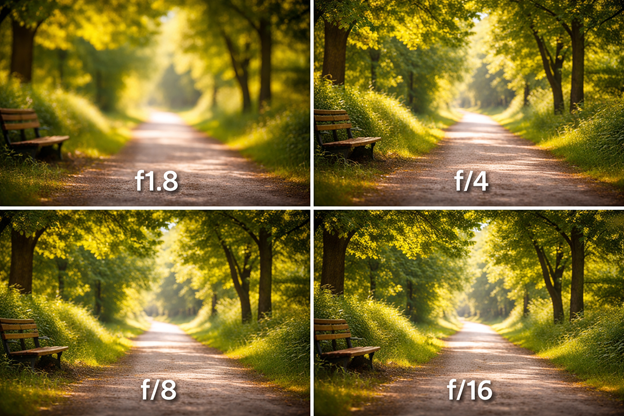
Aperture also influences depth of field, which determines how much of your image appears in focus. A wide aperture produces a shallow depth of field, making the subject stand out against a blurred background. A narrow aperture brings most of the scene into focus, making it ideal for landscapes or detailed shots.
Photographers often adjust aperture creatively to control both brightness and the artistic feel of their photos.
The image demonstrates how different apertures in photography settings affect the depth of field. The f/1.8 shot shows a blurred background; f/4 slightly blurs the background; f/8 keeps most elements sharp; and f/16 achieves full scene clarity, highlighting creative control.
How Does Aperture Work?
Understanding how aperture works can help you take complete control of your camera settings. Here are several key aspects explained in detail.
1. The Role of F-Stops
F-stops measure the size of the aperture opening. Lower f-stop numbers, such as f/1.8 or f/2.8, indicate larger apertures that allow more light to reach the sensor. Higher f-numbers, such as f/16 or f/22, correspond to smaller apertures, thereby allowing less light to reach the sensor.
According to Nikon UK, a smaller aperture increases the portion of the image that remains in sharp focus, making it ideal for photography styles like landscapes, where clarity across the entire scene is essential.
F-stops also affect depth of field. Wide apertures with low f-stop numbers give blurred backgrounds, while narrow apertures keep more of the scene in focus.
2. Impact on Image Brightness
The size of the aperture directly affects image brightness. A larger aperture brightens photos in dark conditions, helping to maintain sharpness without increasing ISO too much. Smaller apertures reduce brightness in bright sunlight, preventing overexposure. Learning how aperture works with light is essential for consistent results, especially when switching between indoor and outdoor settings.
3. Influence on Depth of Field
Aperture determines the depth of field, the range of distances that appear acceptably sharp in a photograph. Wide apertures create a shallow depth of field, ideal for portraits and highlighting subjects. Narrow camera apertures increase depth of field, which is helpful for landscapes or architectural photography. Understanding this allows photographers to guide viewers’ attention effectively within a composition.
4. Controlling Motion and Shutter Speed
Adjusting the aperture affects the shutter speed needed for proper exposure. A larger aperture allows faster shutter speeds, freezing motion efficiently. A smaller aperture often requires slower shutter speeds, which can create motion blur if your subject or camera moves.
This interplay between aperture and shutter speed is critical for capturing dynamic scenes. Understanding how aperture works also reduces reliance on automatic modes. Manual control feels less intimidating once the logic feels natural.
5. Choosing the Right Aperture for Your Lens
Each lens performs best at certain apertures, known as its “sweet spot.” Most lenses deliver optimal sharpness between f/5.6 and f/11. Understanding your lens characteristics helps improve image quality and makes the most of the camera’s aperture settings.
| f-stop | Aperture Size | Common Uses |
| f/1.4 | Very wide | Low-light, portraits with strong blur |
| f/2 | Wide | Portraits, indoor events |
| f/2.8 | Wide | Portraits, weddings, astrophotography |
| f/4 | Medium-wide | General portraits, street |
| f/5.6 | Medium | Every day shooting, group portraits |
| f/8 | Medium-narrow | Landscapes, architecture |
| f/11 | Narrow | Landscapes, cityscapes |
| f/16 | Very narrow | Macro, landscapes in bright light |
| f/22 | Tiny | Extreme depth, pinhole effects |
If you are interested in exploring high-quality lenses, you can browse discounted camera lens prices in Pakistan at Golden Camera. Connect with us to explore a variety of options specific to your photography needs.
6. Aperture in Mirrorless Cameras
Modern mirrorless cameras offer precise aperture control via digital and physical dials. You can adjust the aperture in real time, even while previewing depth-of-field effects on your screen. Mirrorless systems offer flexibility and speed for photographers, facilitating experimentation with aperture.
Many enthusiasts look for mirrorless cameras in Pakistan for this reason, especially when learning aperture control. You can get an exquisite range at discounted prices only at Golden Camera.
Practical Tips for Using Camera Aperture
Understanding aperture in photography unlocks creative control over light, depth of field, and sharpness in every scene you capture.
- Start in aperture priority mode. Let the camera manage shutter speed while you select the f-stop for precise control.
- Experiment outdoors by photographing the same scene at f/2.8, f/8, and f/16. Observe how backgrounds blur or come into focus.
- In low-light indoor settings, use a wide aperture to reduce high-ISO noise and maintain clean, detailed images.
- In bright sunlight, stop down the aperture to prevent overexposure and maintain detail throughout the frame.
- Avoid extreme apertures, such as f/16 or smaller, on many sensors, as diffraction can degrade image quality.
- Practice different camera apertures to enhance storytelling, control image brightness, and sharpen your understanding of photographic technique.
Frequently Asked Questions
1. What is aperture in photography?
Aperture in photography is the adjustable opening within a lens that controls the amount of light reaching the sensor. This opening affects exposure brightness and depth of field. A wide opening allows more light and creates a softer background blur. A narrow opening reduces light and increases scene sharpness. Understanding aperture helps photographers control mood, clarity, and subject emphasis with precision and confidence.
2. How does aperture affect image brightness?
Aperture affects brightness by controlling the amount of light entering the camera. Wider settings admit more light and produce brighter images, particularly in dim environments. Narrow settings restrict light and darken images in bright scenes. This control helps balance exposure without relying solely on shutter speed or ISO adjustments.
3. What does f-stop mean?
F-stop denotes the numerical value that represents the aperture size. Smaller numbers indicate wider openings, while larger numbers indicate narrower openings. Each complete f-stop change doubles or halves light volume. This standardized scale helps photographers predict exposure changes and maintain consistency across different lenses and camera systems.
4. How does aperture affect depth of field?
Aperture directly controls depth of field. Wide apertures create a shallow depth of field, isolating subjects with blurred backgrounds. Narrow apertures increase depth of field, keeping more of the scene sharp. This effect allows photographers to craft visual focus and storytelling style through intentional aperture selection during shooting.
5. What is the best aperture for beginners?
Beginners often feel comfortable with mid-range apertures such as f/5.6 or f/8. These settings provide balanced sharpness and manageable exposure across a wide range of scenes. They reduce technical complexity while still allowing creative growth. As confidence builds, experimenting with wider or narrower settings becomes easier and more rewarding.
Final Thoughts
Grasping aperture in photography marks a turning point for any shooter. It controls light entry and shapes focus zones, giving you tools to craft mood and emphasis. Practice with different f-stops, observe real-world effects, and soon, choices will feel instinctive. Your photos will gain depth, clarity, and impact, drawing viewers in.
Mastering camera aperture builds trust in creative decisions. Instead of guessing, photographers act with intention. Images feel consistent, expressive, and controlled. That confidence grows with practice and thoughtful experimentation.