
Blog
Why Cinema Cameras Are Becoming Affordable for Small Studios

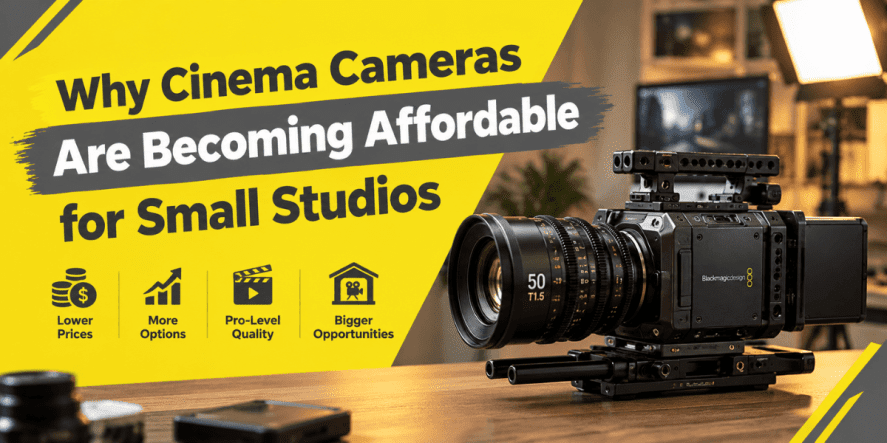
Cinema-quality production is no longer reserved for big studios with blockbuster budgets. As camera technology advances and prices become more accessible, small production houses can invest in professional imaging tools without stretching their finances as much. This shift is changing how independent filmmakers, content creators, and boutique studios approach visual storytelling, making high-end production capabilities a more realistic part of everyday filmmaking.
Let’s look at what changed, why prices have become more accessible, and what this shift means for small studios. Affordable cinema cameras for small studios are no longer rare, and that shift gives small teams real creative options.
What Is a Cinema Camera?
A cinema camera is a camera built mainly for high-quality motion picture work. Sensor size, resolution, dynamic range, and color sampling shape its image, and practical features such as recording formats, connectivity, and form factor shape how it works on set.
Lighting, set design, and shot selection also play a large role, so the camera is only one part of the final picture. Understanding this helps you judge which features truly matter for your studio.
Why are Cinema Cameras Becoming Cheaper?
Many studio owners wonder why cinema cameras are becoming more affordable. The explanation involves multiple simultaneous changes. The following sections explain each in straightforward language.
Mirrorless and DSLR Video Changed the Market
Cinema cameras are becoming cheaper as technology advances, manufacturing costs shift, and competition grows across the camera market. Features once limited to high-end cinema systems are now available in more compact, affordable models.
The rise of capable DSLR and mirrorless cameras has also encouraged manufacturers to offer professional video tools at more accessible price points, giving small studios greater flexibility when investing in production equipment.
Smaller and Simpler Camera Bodies
Many compact cinema cameras use lens mounts also found on mirrorless systems, making existing lens ecosystems easier to use. Several models also support RAW or other high-quality recording formats, depending on the camera. Simpler bodies with fewer controls cost less to manufacture, and users rig the camera to suit their own role.
Strong Competition Among Brands
Some brands entered the market without high-end cinema lines to protect. They offered raw video, high frame rates, and dual ISO in compact cameras, which widened the choices available to small studios and independent filmmakers.
Better Sensors and Recording Quality at Lower Levels
Digital Cinema Society notes that some modern digital cinema cameras can deliver more than 15 stops of dynamic range, narrowing the gap with the tonal latitude filmmakers once associated primarily with higher-end systems. It also notes that most cinema and mirrorless cameras now offer 4K recording at a more economical price than a few years earlier.
Slower Pace of Big Technical Leaps
Filmmaker Noam Kroll argues that newer improvements have become incremental, and that a camera from a previous generation can still look excellent in skilled hands. This keeps capable cameras within reach of smaller teams, since a studio does not need the newest release to produce strong work.
Economies of Scale and Manufacturing Choices
Producing components and camera bodies at larger volumes can reduce per-unit manufacturing costs, while simpler designs and shared components can also help control production expenses. Makers can also keep costs down by choosing simple shapes and fewer controls. A basic camera is not a badly made camera.
None of these changes work alone. Together, they explain why a studio can now reach professional image quality with a smaller budget, while top-end cameras still serve productions that need industrial strength, more controls, and deeper connectivity.
Studios comparing options can explore the Sony FX5 Cinema Camera at Golden Camera, a compact model from Sony’s Cinema Line. Discover its features and find the right equipment to support your studio’s next production.
How Do Cinema Cameras Compare With Standard Mirrorless Cameras?
One reason cinema cameras have become more accessible is that the distinction between cinema and mirrorless video has narrowed in several areas. The table below highlights the main differences.
| Area | Cinema Camera | Standard Mirrorless Camera |
| Design focus | Built around motion picture work | Often designed with still photography in mind |
| Sensor readout for video | Sensor resolution often matches video resolution | Some models use line skipping or pixel binning |
| Color sampling | 4:2:2 is common, with 4:4:4 at the highest end | Most use 4:2:0 sampling |
| Built-in ND filters | Found mainly on professional high-end models | Usually require external ND filters |
| Controls and connections | More video-specific controls and connectivity | Fewer video-specific controls |
What Lower-Cost Cinema Cameras Mean for Small Studios
A lower price is only beneficial if the camera suits your work. Before comparing models, focus on three key areas, since they affect image quality and the accessories you need.
Lens Mount and Sensor Size
Consider lens choice early, since lens mounts decide which lenses you can use. Bigger sensors give shallower depth of field, yet they also make focus harder to keep, and a Super 35 sensor can achieve a cinematic look while opening up a wide range of lenses.
Dynamic Range and Low-Light Performance
Wide dynamic range keeps detail in bright windows and dark corners. Low-light performance matters most for small crews shooting with limited lighting. Larger pixels collect more light, and back-illuminated sensor designs improve light capture.
Resolution and Delivery Needs
Choose resolution based on where your videos will appear. Online delivery may not need more than 1080p, yet 4K is a sound way to protect your investment. Recording above your delivery size also produces sharper downscaled footage.
Why Cinema Cameras Are More Affordable and What It Means for Small Studios
This is why cinema cameras are more affordable in day-to-day practice: features that once needed a top-tier body now appear in compact designs. The result is a wider set of tools for small teams, along with a few costs that deserve careful planning.
Features Small Studios Gain
Log gamma profiles preserve shadow and highlight detail, so colorists can shape the final look in post. Mirrorless mounts also adapt easily to other lens mounts because of their short flange distance. Compact bodies are also easier to carry and rig on gimbals and overhead arms, as Sigma’s blog explains. Together, these features give small teams a flexible and professional workflow.
Costs to Plan For
A lower camera price does not always mean a lower total cost. Hidden expenses can include viewfinders, shoulder rigs, external recorders, lenses, batteries, and media cards. Planning the full package before you buy protects your budget.
Storage and Media
Raw recording creates very large files, so you will need plenty of cards, storage drives, and a computer that can handle the footage. Compressed formats reduce file sizes, although intraframe codecs are easier to play back and edit. For many studios, simple log recording is enough.
Rigging and Accessories
Even with a cage, rods, an audio recorder, and external power supplies added, a mirrorless setup often remains more affordable than many professional models. Build the rig around actual shooting needs rather than a lengthy wish list.
FAQs
1. What has made professional video equipment more accessible?
Strong video features in DSLR and mirrorless cameras, compact cinema bodies, competition among manufacturers, simpler designs, and lower prices on professional models have all contributed to broader access.
2. Can a small production team benefit from using a cinema camera?
Yes. Cinema cameras offer wide dynamic range, log recording, and video-focused controls that give small teams more flexibility in grading. Compact cinema cameras are easier to rig on gimbals, cars, and overhead arms.
3. What features should a small studio prioritize when choosing a camera?
Start with lens mount and sensor size, then check dynamic range, log gamma, bit depth, and low-light performance. Match resolution to your delivery needs, since 1080p may be enough for online videos while 4K adds future-proofing.
4. How do cinema cameras differ from standard mirrorless cameras?
Cinema cameras are built around video, so they often offer cleaner sensor readout, richer color sampling, and more video-specific controls. Standard mirrorless cameras designed for stills may use line skipping or pixel binning, although some models perform very well.
5. What additional equipment is usually needed for a cinema camera setup?
Plan for lenses, batteries, media cards, and possibly an electronic viewfinder, a shoulder rig, or an external recorder. ND filters, audio gear, and storage drives are also common needs.
Final Thoughts
Cinema cameras are becoming affordable because several forces have converged: strong video in mirrorless cameras, compact designs, healthy competition, and smarter manufacturing choices. Small studios now have tools that support wide dynamic range and 4K recording without the cost of traditional cinema bodies. Still, the best purchase fits your projects, your lenses, and your total budget. Small teams that plan carefully can build a capable kit step by step. Take your time, plan the whole setup, and choose with confidence.
For studios seeking a versatile full-frame camera for video production, the Canon EOS R6 V Mirrorless Camera is another option available at Golden Camera. Explore its video capabilities and features to find equipment that fits your production needs and budget.