
Blog
How to Carry Gimbals During Outdoor Shoots

Published: 18 March 2026
Last Updated: 18 Sept 2026
Outdoor filming puts your camera gear through more than just long hours of shooting. Dusty streets, intense sunlight, high temperatures, crowded locations, and sudden rain can make carrying and protecting a gimbal challenging. Understanding what does a gimbal do also explains why careful handling matters, as its motors, sensors, and electronic components work together to keep the camera stable.
Knowing how to transport your gimbal properly can help you avoid unnecessary knocks, keep your setup secure, and move between locations with less hassle. This guide covers practical carrying techniques, protective bags and cases, outdoor setup tips, maintenance, and gimbal models worth considering for different shooting needs.
The Growing Importance of Proper Gimbal Handling
The stabilizer category has grown quickly alongside the rise of independent video production. According to IMARC Group, the global camera stabilizer market reached USD 4.4 billion in 2025 and is forecast to reach USD 6.3 billion by 2034, growing at a CAGR of 3.73%. Asia Pacific accounted for 35.0% of the market in 2025.
This growth mirrors what is happening locally. Gimbals are widely used for wedding videography, YouTube content, real estate marketing, and small production shoots in cities such as Karachi, Lahore, and Islamabad, as they are a primary stabilization tool for outdoor coverage, making proper handling more important than ever. Dust from open markets, sudden temperature swings, and monsoon humidity all place extra strain on motors and battery contacts that were never designed for constant outdoor exposure.
What Does a Gimbal Do: Understanding the Purpose Before You Carry One
If you’re asking, “What is the purpose of a gimbal? ” its primary role is to stabilize a camera during movement and reduce unwanted shake. A 3-axis gimbal is a motorized stabilization device that controls pan, tilt, and roll to counter unwanted camera movement. Its core job is to remove the small shakes, bumps, and drifts that happen naturally when someone walks, runs, or turns while filming, so the final footage looks smooth and intentional rather than amateur.
This is generally why a single operator can capture cinema-style moving shots without a dolly, track, or second crew member. Because the entire mechanism depends on precisely calibrated motors, rough handling during transport is one of the fastest ways to undo the very stability the device is built to provide.
How to Carry a Gimbal Safely While Moving
Here is the proper approach to carrying a gimbal safely while you are moving between shots.
1. Keep It Powered Off When Walking Long Distances
One of the most important rules when learning how to hold a gimbal outdoors is to turn it off when you are not actively shooting. If you are not actively shooting, powering the gimbal off can conserve battery and prevent unnecessary movement while you travel between locations. Power it down, lock the axes if your model allows it, and secure it before moving.
2. Use Both Hands for Stability
When walking short distances between shots, hold the grip firmly with one hand and lightly support the arm or camera plate with the other. This reduces strain on the motors and minimizes sudden jerks. Avoid swinging the gimbal loosely at your side, as sudden impacts or collisions can damage the camera, gimbal arms, or other components.
3. Use a Sling Strap for Longer Walks
If your gimbal supports a compatible sling or wrist strap, using one can make longer walks easier while keeping the equipment close to your body. Choose a secure attachment point and avoid letting the gimbal swing freely.
4. Lock All Axes Before Packing
Many modern camera gimbals include axis locks that help secure the arms during transport. Always engage these before placing the device inside a bag, since an unlocked axis can move freely and strike a nearby surface during transport. Securing the axes also keeps the gimbal in a more stable position and helps reduce unnecessary movement inside the bag.
5. Remove the Camera If Necessary
For longer transport, consider detaching the camera if recommended by the gimbal manufacturer or if it makes the setup safer and easier to pack. These are some of the best tips for carrying a gimbal safely that professionals follow on commercial shoots.
How to Carry a Gimbal During Outdoor Shoots: Bag, Backpack, or Case?
There is no single best way to carry a camera gimbal for every situation. The right choice depends on shoot length, distance between locations, and how much other gear needs to travel with it.
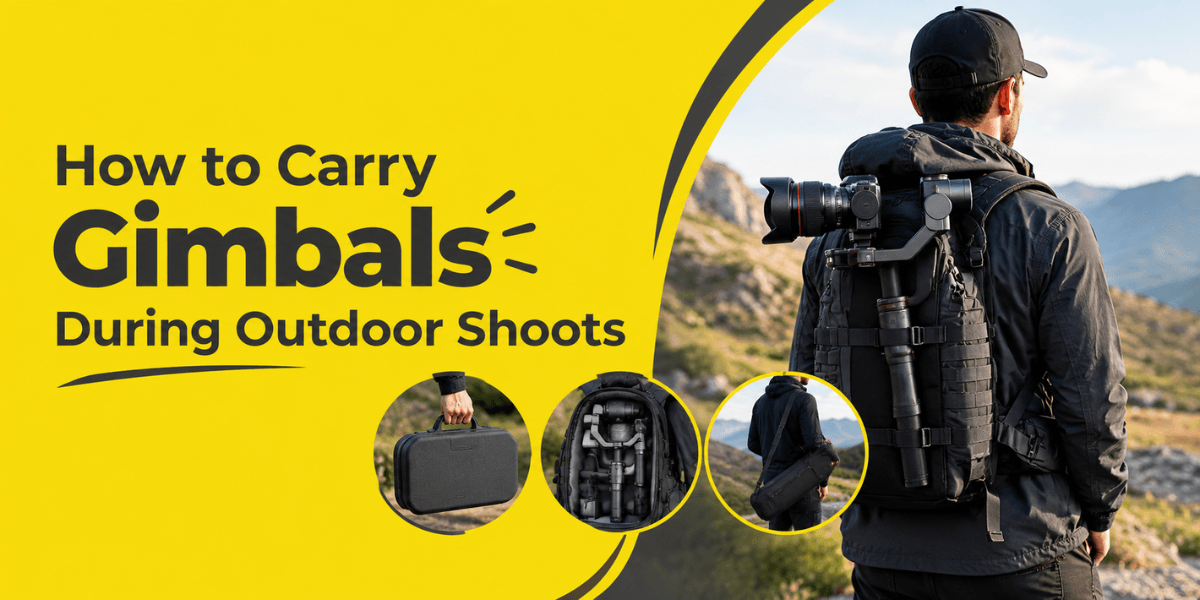
A dedicated gimbal carry backpack is one of the smartest investments for outdoor filmmakers. These backpacks typically include custom compartments, shock-absorbing padding, weather-resistant materials, and secure straps to prevent movement. Do not place your gimbal loosely inside a standard bag; use padded dividers to avoid impact with lenses or batteries.
Golden Camera stocks a wide selection of camera gimbals and stabilizers for different shooting setups. Browse our collection to find a gimbal that fits your camera, travel needs, and outdoor workflow.
Camera Gimbal Setup for Outdoor Shoots: Getting Ready Before You Leave
A solid camera gimbal setup starts well before the first shot, not after arriving on location.
1. Balance the Camera on the Gimbal First
Attach the camera and adjust the sliding plates on each axis until the gimbal holds its position on its own without motor assistance. An unbalanced gimbal forces the motors to work harder throughout the shoot, draining the battery faster and increasing wear over time.
2. Check Sync and Wireless Connections
Confirm any wireless triggers, follow-focus units, or app connections are working before leaving the studio. A failed connection on location wastes valuable shooting time. Test each connected device with the gimbal before heading out to avoid setup delays on location.
3. Pack Spare Batteries and a Cleaning Kit
Outdoor shoots rarely go exactly to schedule. Carrying a spare battery and a small air blower means you are never stuck waiting on a charge or fighting dust mid-shoot. Keep these essentials in an easily accessible pocket so you can reach them quickly during the shoot.
How to Protect a Gimbal During Outdoor Shoots
Outdoor environments often involve dust, especially during wedding shoots or desert locations. To protect the gimbal outdoors, consider using a rain or dust cover, cleaning motors gently with a soft brush, and storing it in a sealed bag when not in use.
Avoid placing the gimbal directly on the ground. Extended exposure to direct sunlight can overheat electronics, and exposure to high temperatures can affect battery performance and may shorten battery life if the equipment is repeatedly exposed to excessive heat. If you are shooting near beaches or during monsoon season, moisture can be a serious risk. If your specific gimbal has an IP or water-resistance rating, follow the manufacturer’s stated limits rather than assuming it can safely operate in heavy rain.
What Is the Use of a Gimbal in Photography and Videography
A gimbal is used to keep a camera stable during movement and help filmmakers capture controlled shots. It is especially useful for scenes that involve walking, following a subject, changing positions, or creating smooth camera movements.
Wedding and Event Filming
Gimbals are useful for wedding ceremonies, receptions, and other live events where the camera operator needs to move quickly between subjects. They make it easier to follow the couple, capture guest interactions, and move through crowded spaces while maintaining controlled footage.
Travel and Outdoor Content
For travel videos, documentaries, and outdoor content, a gimbal allows filmmakers to move through different environments without being restricted to a fixed shooting position. It is practical for capturing walking tours, destination footage, action sequences, and location-based stories.
Real Estate and Commercial Videos
Gimbals are also commonly used for property walkthroughs, promotional videos, and commercial content. Their controlled movement can help filmmakers move through rooms, around products, or alongside subjects while maintaining a consistent visual presentation.
Content Creation and Social Media
Content creators can use compact gimbals to produce polished videos for social media, YouTube, and other digital platforms. Smartphone-compatible models are particularly useful when portability and quick setup are more important than carrying a larger camera rig.
What Are the Benefits of Using a Gimbal?
The main benefits of a gimbal come from improved stability, control, and consistency during filming. By reducing unwanted camera movement, a gimbal helps filmmakers handle dynamic scenes more effectively and achieve cleaner, more polished footage.
1. Smoother Footage
A gimbal’s motorized stabilization helps minimize small shakes, bumps, and unwanted movements. This is especially valuable when filming while walking, following a subject, or changing direction.
2. Greater Shooting Flexibility
A gimbal gives filmmakers more freedom to move around a scene and capture dynamic footage. It can make moving shots easier to manage without limiting the camera to a fixed position.
3. More Consistent Framing
Stabilized movement helps keep the camera positioned more consistently throughout a shot. This makes it easier to maintain the intended composition while the operator moves.
4. Improved Shooting Efficiency
After the camera is properly balanced and the gimbal is configured, filmmakers can move between shooting positions quickly. This can reduce the need to stop and reposition stationary equipment for every moving scene.
5. More Polished Results
Smooth camera movement and steady framing can give videos a cleaner, more professional appearance. This makes gimbals useful for filmmaking, events, travel videos, interviews, and outdoor content.
Latest Gimbal Model Picks Worth Knowing for Outdoor Shooters
Anyone comparing the latest gimbal models worth considering for Outdoor Shooters will find that most manufacturers have shifted toward lighter builds, longer battery life, and AI-assisted subject tracking, all of which matter directly for outdoor, run-and-gun style shooting.
Picking between them usually comes down to payload headroom: a rig with room for a full-frame body and a standard zoom lens stays balanced far more easily than an undersized model pushed past its limit. For lighter mirrorless or APS-C kits, weight and folded size often matter more than raw payload capacity, since portability becomes the priority once the camera itself is already compact. Choosing the best gimbal for cinematography depends on your camera weight, lens setup, shooting style, and the amount of movement required during outdoor filming.
Common Mistakes to Avoid During Gimbal Handling for Outdoor Shoots
Even experienced creators make avoidable mistakes. Here are some to watch out for:
- Leaving the gimbal powered on during transport: This can drain the battery and allow unnecessary movement.
- Leaving the axes unlocked: Unsecured axes can move during transport and increase the risk of impact.
- Carrying the entire tripod setup over long distances: This can make the equipment harder to control and increases the risk of accidental impact.
- Storing the gimbal without cleaning: Dust and debris can accumulate around moving components and connections.
Avoiding these mistakes improves long-term performance and reduces the number of repair visits over the life of the gimbal.
Maintenance After Outdoor Shoots
Proper maintenance after an outdoor shoot helps protect your gimbal from dust, heat, moisture, and everyday wear. Cleaning the equipment, checking key components, and storing it correctly can help maintain reliable performance and extend its working life.
Complete an Immediate Post-Shoot Check
Before putting your gimbal away, take a few minutes to inspect and clean it:
- Wipe the gimbal with a dry, lint-free cloth to remove dust and surface dirt.
- Check the mounting plate, quick-release lever, and axis locks for debris or damage.
- Inspect screws, knobs, and other accessible connections for looseness.
- Make sure the gimbal is powered off completely before storage.
- Remove the battery if recommended by the manufacturer’s storage instructions.
These simple checks can help you spot small issues before they affect your next shoot.
Protect Your Gimbal During Pakistan’s Seasonal Weather
Pakistan’s outdoor conditions can expose camera equipment to high temperatures, dust, and seasonal humidity. During hot summers, keep the gimbal out of direct sunlight and never leave it inside a parked vehicle. Allow it to cool down after extended use before placing it in its case.
During monsoon season, protect the gimbal from rain and excessive moisture. If the equipment moves between a hot outdoor environment and a cool indoor space, allow it to reach room temperature gradually. Keeping silica gel packets inside the storage case can also help manage moisture.
Know When Professional Servicing Is Needed
Some gimbal problems require professional inspection instead of DIY repairs. Arrange professional servicing if you notice:
- Unusual motor noises: Grinding, clicking, or other abnormal sounds can indicate a mechanical problem.
- Persistent drift: If the gimbal continues to drift after proper calibration, professional diagnosis may be necessary.
- Damaged mounting components: A cracked or bent mounting plate can affect camera balance and secure attachment.
- Water exposure: If the gimbal has been exposed to heavy rain or water, stop using it and follow the manufacturer’s guidance before powering it on again.
Avoid opening the motor housing or attempting internal repairs yourself. Incorrect handling can damage sensitive components and may affect the manufacturer’s warranty. Regular cleaning, careful weather protection, and timely servicing can help keep your gimbal reliable and ready for your next outdoor shoot.
A Simple Gimbal Maintenance Kit
Keep your equipment protected between shoots with the right storage and accessories. Explore Golden Camera’s selection of the best camera bags for photographers to help keep your gimbal and other gear clean, secure, and ready for your next shoot.
Consistent cleaning, careful storage, and regular checks can help keep your gimbal reliable and reduce the risk of costly repairs.
Frequently Asked Questions
1. What Is The Best Way To Carry A Gimbal During Outdoor Shoots?
The best approach combines a two-handed grip or sling strap while actively moving between shots, with a padded gimbal backpack or hard case for longer transport. Power the unit off and engage the available axis locks according to the manufacturer’s instructions.
2. Can You Carry A Gimbal Safely Without A Protective Case?
Yes, for short distances, as long as the axes are locked and the unit is held securely with both hands or a strap. For longer transport, travel, or crowded environments, a padded case or backpack is strongly recommended to prevent drops, dust exposure, and accidental knocks against other gear.
3. What Type Of Gimbal Bag Is Best For Outdoor Photography?
A dedicated gimbal backpack with shock-absorbing padding, weather-resistant fabric, and secure internal straps works best for full outdoor shoot days. Sling bags suit quick, short-distance moves between setups, while hard shell cases are better reserved for flights or rough transport conditions.
4. How Can You Protect A Gimbal While Traveling Between Locations?
Detach the camera for longer trips, engage all axis locks, and wrap the gimbal head in a microfiber cloth if the original case is unavailable. Keep it out of direct sunlight, avoid hot car interiors, and use a waterproof cover during monsoon season or unpredictable weather.
5. Should You Disassemble A Gimbal Before Carrying It?
Full disassembly is not necessary, but detaching the camera for longer travel reduces weight stress on the motors and mounting plate. For short walks between nearby shots, keeping the camera attached with the axes locked is usually faster and just as safe.
Final Thoughts
Carrying a gimbal during outdoor shoots demands careful planning and responsible handling. Properly holding the gimbal and investing in a durable carry backpack are essential for longevity. From moving between locations to storing your equipment, every step should protect the gimbal from unnecessary impact and environmental exposure. Always prioritize safety during travel, implement measures to protect the gimbal outdoors, and pack systematically.
Regular cleaning, proper storage, and routine checks can also prevent minor issues from affecting your next shoot. These simple maintenance habits help you catch potential problems early and keep your equipment in dependable working condition. With the right carrying technique and maintenance habits, your gimbal can remain reliable and ready to deliver smooth, stable footage across different outdoor locations.