
Blog
How to Choose Pro Audio Cables for Better Signal Quality

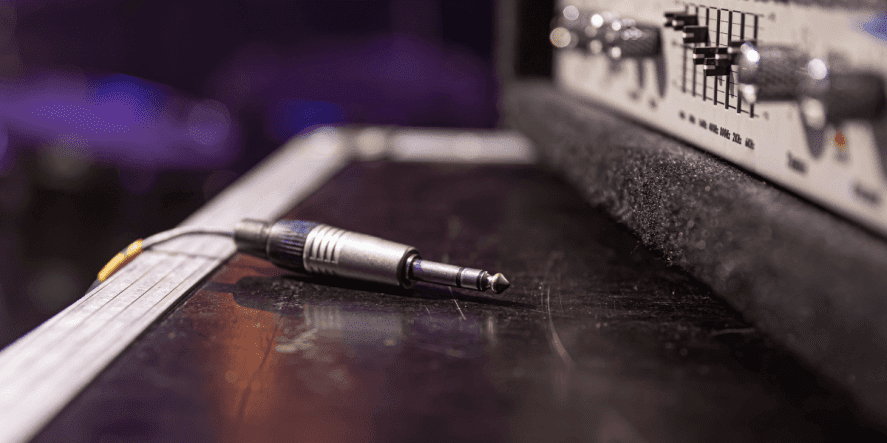
Choosing the right pro audio cables might not be the most glamorous task, but it’s definitely one of the quickest ways to enhance the clarity, consistency, and reliability of your sound. If you’re recording a voiceover, managing a small public address for nikkah events, or mixing a full band on stage in Lahore or Karachi, good cables make a noticeable difference.
This guide breaks down exactly what matters (and what doesn’t) so you can make confident, budget-smart choices that protect your signal from noise and failure.
What “Signal Quality” Really Means in Pro Audio
“Better signal quality” isn’t a vague promise; it’s a set of measurable outcomes:
- Lower noise and hum (higher signal-to-noise ratio)
- Fewer clicks, RF bursts, and ground-loop buzz
- Full-range frequency response with minimal loss over the run
- Stable, interference-resistant connections that don’t fail mid-show
The cable you pick affects all of this. Design (balanced vs unbalanced, conductor layout), build (shield type, jacket, connectors), electrical specs (capacitance, impedance), and length each play a role. Balanced cabling and correct interfacing are foundational to keeping noise out of your audio path!
Balanced vs Unbalanced Audio Cables
When people compare balanced vs unbalanced audio cables, they’re really talking about how the signal is carried and rejected at the destination. Balanced lines send the same audio on two conductors with opposite polarity and use a differential input to cancel interference.
Unbalanced lines carry signal and ground on two conductors and are more exposed to noise over distance. Use balanced wherever possible, especially for microphones, long runs, or electrically noisy spaces near dimmers and generators.
Balanced Lines (XLR/TRS)
- Where to use: Microphones, stage boxes, mixers, audio interfaces, active speakers, and long line-level runs.
- Connectors: XLR (3-pin) or 1/4″ TRS.
- Why they work: Two opposite-polarity signals plus a shield; the receiving device subtracts the pair and cancels noise induced along the cable.
Unbalanced Lines (TS/RCA)
- Where to use: Short instrument leads (guitar/bass to amp), some consumer players, and short patching in low-noise environments.
- Limitations: More susceptible to hum, RF, and high-frequency loss as cable length increases because capacitance builds up. It’s best to keep them short.
When You Must Convert Between Them
You’ll sometimes need to connect an unbalanced gear to a balanced input (or vice versa). The safest, most predictable approaches use proper wiring schemes or isolation transformers rather than ad-hoc adapters. Many notes and application guides on the internet show proven ways to do this without inviting ground loops or distortion.
Types of Microphone Cable and Where Each Fits
When people ask about types of microphone cable, they usually mean three families: standard twisted-pair mic cables, star-quad mic cables, and 110-ohm AES3 digital mic/line cables.
1. Standard Twisted-Pair Mic Cables (XLR-XLR)
Standard twisted-pair mic cables (XLR-XLR) feature two insulated conductors twisted together with an overall shield. They are typically used for day-to-day microphones, connecting lines between the stage and mixer, and standard studio patching. Their reliability comes from the twisting, which equalizes exposure to external fields, while the shield blocks electric-field interference and the balanced input rejects common-mode noise.
Shielding: Braid vs Spiral vs Foil
- Braided copper shields offer excellent coverage, durability, and flex life, ideal for stage work.
- Spiral (serve) shields are flexible and light, standard in budget or short-run cables, but can open with repeated flexing.
- Foil shields provide nearly 100% coverage, suitable for permanent installs; pair with a drain wire, but they’re less flexible for stage. Technical notes outline how shielding style influences noise ingress and handling.
2. Star-Quad Mic Cables
Star-quad uses four conductors arranged in a cross pattern, paired into two opposite legs of a balanced line. The geometry tightens magnetic field coupling, dramatically improving hum rejection, especially valuable near dimmers, AC mains, and lighting ballasts at weddings, studios, and event halls.
Most of the data present on the internet indicates up to ~50 dB improvement at mains frequencies and roughly one-tenth the noise compared to standard 2-conductor mic cable. The trade-off is slightly higher capacitance, so keep extremely long runs in check!
3. Digital Mic/Line Cables (AES3 / AES-EBU, 110 Ω)
For AES3 (balanced digital audio), use a 110-ohm twisted-pair cable with XLR connectors. It looks like a mic cable but is built to a tighter impedance spec to avoid jitter and data errors. Don’t assume any XLR-XLR will behave the same as digital; if you’re carrying AES3 over long distances, the proper cable matters.
Spec Sheets That Matter
1. Capacitance and Length
Capacitance accumulates with length and forms a low-pass filter with your source’s output impedance. On high-impedance sources, like passive guitar pickups, long, high-capacitance cable audibly dulls the top end.
For microphones and balanced line-level, the effect is smaller but still real over very long runs. Choose lower-capacitance designs when you need long analog runs, or keep runs short where possible.
How Cables Affect Sound Clarity?
If you’ve ever wondered how cables affect sound clarity, focus on three factors: topology (balanced vs unbalanced), shielding and geometry (standard vs star-quad), and total capacitance per meter times length. Improve any of those, and you typically improve clarity, especially in live scenarios with lots of electromagnetic activity. Most of the professionals discuss how capacitance and geometry influence high-frequency bandwidth and noise pickup!
2. Conductor Gauge and Resistance
Thicker conductors (lower AWG numbers) reduce series resistance and can improve durability. For mic and line cables, 24–22 AWG is standard; 21–20 AWG is sometimes used in star-quad. Extremely thin conductors can break with repeated flexing. Balance handling needs (flexibility and weight) with robustness, especially if your rig travels across cities and venues.
3. Connector Quality (XLR/TRS/TS)
Quality connectors maintain consistent contact pressure, correct pin dimensions, and provide reliable strain relief. Proper XLR pinout is critical: Pin 1 shield, Pin 2 hot, Pin 3 cold. If you use phantom power, balanced mics on correctly wired balanced lines are fine; poor wiring or using unbalanced mics on phantom-powered lines creates problems.
Build Quality and Field Reliability
Strain Relief, Jacket, Flex Life
On a busy stage or in a mobile setup, cables take abuse: foot traffic, tight coils, temperature swings. Look for:
- Molded or mechanical strain relief that grabs the jacket, not just the conductors.
- Tough, flexible jacket that doesn’t kink and resists cuts.
- Full-coverage braid shields for stage durability.
- Heat-shrink booting and labeling to reduce stress on solder joints.
Environmental Considerations in Pakistan
Events often mix stage lighting dimmers and long runs in warm, dusty environments. Favor star-quad for mic lines near dimmers and power cables; use balanced lines for any run over a few meters; and secure cable paths away from AC and lighting wherever possible.
Keep spare short XLRs to re-patch away from interference quickly. For semi-permanent installs in mosques or halls, foil-shielded options can be cleaner and easier to pull in conduits, but don’t choose foil for heavy stage use.
Cable Testing Methods
Nothing ruins a show faster than a bad lead. Adopt simple, repeatable cable testing methods:
- Visual inspection: Check for kinks, crushed sections, loose boots, or bent XLR pins.
- Continuity test (multimeter or cable tester): Verify pin-to-pin continuity (1-to-1, 2-to-2, 3-to-3 on XLR) and ensure no shorts between pins or to the shell. A multimeter’s continuity beep is sufficient for quick checks!
- Wiggle test: While monitoring continuity, flex each connector and a few points along the jacket to catch intermittent faults.
- Polarity check: Some testers confirm pin-2 hot / pin-3 cold; fix any mis-wires immediately.
- Phantom power sanity check: On a known-good input, enable phantom, plug a balanced dynamic mic, confirm normal operation (no crackle), then disable. If anything behaves oddly, retest the cable; incorrect pin wiring is a common cause.
Dedicated cable testers (the small stagebox-style units) speed this up. Keep one in your case and label every cable that fails so it doesn’t return to the stage by mistake.
Smart Buying Tips
For Project/Home Studios
- Use balanced XLR/TRS for every mic and line connection possible.
- Keep unbalanced instrument cables short, especially with passive guitars.
- For digital outboard linking via AES3, choose 110-ohm XLR cables for dependable clocking and error-free transmission.
For Houses of Worship & Education
- Prioritize consistent, labeled lengths (3 m, 5 m, 10 m, 20 m) and a clear color banding scheme.
- Choose robust braided-shield mic leads for volunteers and frequent plugging.
- Keep spare star-quad lines for lectern and choir mics positioned near power or lighting tracks.
For Live Events & Rental
- Standardize on a reputable XLR with solid boots and jackets that resist cuts.
- Use star-quad for critical vocal mics and long runs near power trunks.
- Keep AES3-rated lines for interconnecting digital stage boxes and processors over balanced XLR.
If you prefer a trusted online camera shop, Golden Camera also stocks audio essentials, XLRs, star-quad mic cables, adapters, and testers, so you can add the right leads to your order without hunting multiple stores.
Quick Cable Picker (Use Cases)
Vocal Mic to Mixer (Live Stage)
- Pick: Star-quad XLR-XLR, braided shield, ~5–10 m.
- Why: Extra magnetic hum rejection near dimmers and power strips; rugged shield for stage abuse.
Studio Vocal or Voiceover Booth
- Pick: High-quality twisted-pair XLR-XLR or star-quad for rooms with lighting or RF challenges.
- Why: Balanced line keeps the room quiet; star-quad is insurance if you’re near mains feeds.
Guitar/Bass to Amp
- Pick: Short, low-capacitance unbalanced TS-TS instrument cable.
- Why: Minimizes high-frequency roll-off from cable capacitance; avoid excessive lengths.
Mixer to Powered Speakers (Long Run)
- Pick: Balanced TRS-TRS or XLR-XLR line cable; longer lengths are fine.
- Why: Balanced topology rejects hum and RF over distance.
Digital Processor to Interface (AES3)
- Pick: 110-ohm AES3 XLR cable.
- Why: Proper impedance keeps the data stream healthy and minimizes dropouts or clicks.
Lectern Mic Near Lighting Dimmers
- Pick: Star-quad XLR-XLR.
- Why: Strong magnetic hum rejection; cleaner speech capture in event halls.
Care and Handling to Keep Signals Clean
Proper Coiling
Use over-under coiling to prevent twists, preserve flex life, and enable fast, tangle-free deploys. Avoid tight bends at connectors; let the strain relief do its job.
Labeling and Inventory
Color-code or label lengths and owners. Keep a simple spreadsheet or bin system so bad cables never reenter service without repair.
Storage and Maintenance
Store dry and dust-free. Wipe connectors periodically; replace loose boots and bent XLR pins. If a cable fails even once, tag it immediately and test before reuse.
Final Checklist Before You Buy
- Topology: Balanced wherever possible; unbalanced only for short instrument leads.
- Geometry: Standard twisted-pair for general use; star-quad for hostile EMI/RFI environments.
- Digital: Use 110-ohm AES3 cable for AES-EBU runs.
- Specs: Watch capacitance for long analog runs; keep instrument cables short.
- Build: Prefer braided shields, quality connectors, and real strain relief.
- Test: Continuity and pinout checks on every cable before essential sessions.
Final Thoughts
Great sound depends on clean signal paths. Balanced cabling, appropriate shielding and geometry, proper impedance for digital links, and sensible lengths all add up to quieter, clearer results with fewer surprises. Choose standard twisted-pair for everyday work, star-quad where interference is likely, and 110-ohm AES3 cable for digital. Keep instrument leads short and low-capacitance. Above all, standardize and test your cables so your rig performs reliably, at home, in the studio, or across Pakistan’s diverse event spaces.
When you’re ready to upgrade or standardize your leads, we can help you compare options. Check prices on Pro Audio in Pakistan to get dependable cables that fit your budget. Golden Camera offers high-quality products at highly affordable rates to help you grab the best accessories that does not exceed your budget.